Water Heater Repair & Replacement in Oregon
Most water heater calls split cleanly into two groups: a $200 part on a tank worth keeping, and a tank that has already failed and is quietly ruining the floor. The diagnostic that separates them takes about twenty minutes.
- 1 hour repair, 3 to 5 hours replacement
- Statewide Oregon
- 7 days a week
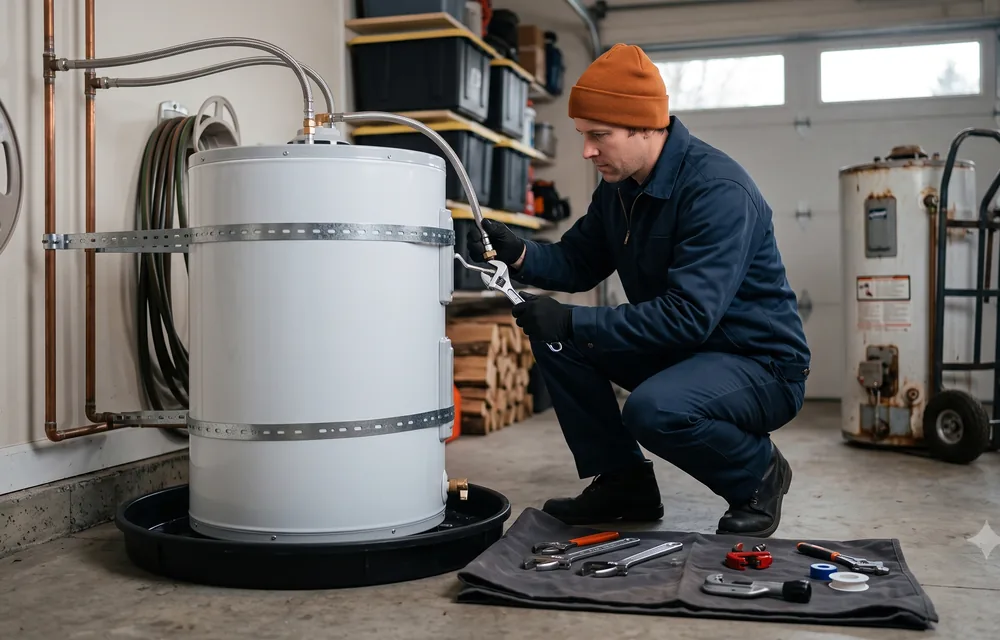
Signs you may need water heater repair & replacement
Most people arrive here describing a symptom rather than naming a service. These are the three that point this way.
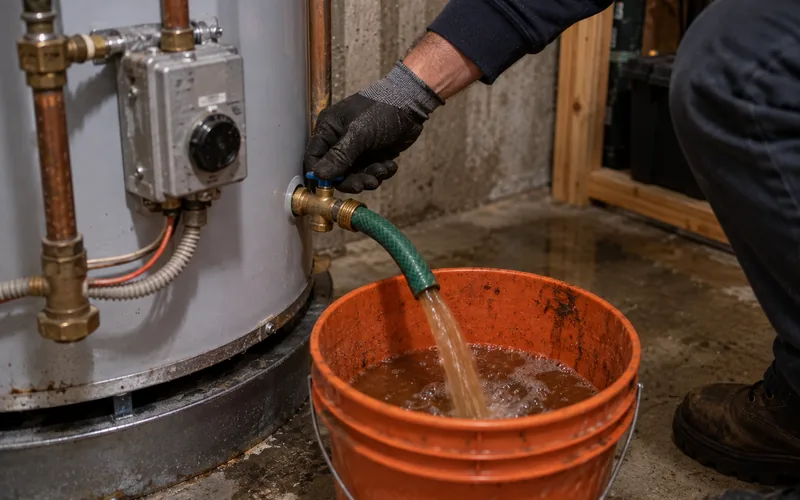
Rusty or metallic-tasting water from the hot tap only
If cold runs clear, the corrosion is inside the tank. The anode is spent and the steel is next, which makes this a replacement question rather than a repair one.
Popping or rumbling during a heating cycle
Sediment on the tank floor trapping water underneath it. The tank is running hotter than designed at the base, which is what cracks a glass lining.
Any moisture at the base of the tank
A tank does not weep and then recover. Check the fittings and the relief line first, but water from the tank body itself means replace now, on your schedule.
Repair or replace — the honest test
Four questions decide it, and none of them require a sales conversation.
How old is it? Check the serial number; the first four digits usually encode month and year. A conventional tank in Oregon lasts eight to twelve years, less in Bend, Redmond, Klamath Falls or Ontario where harder water accelerates scale. Past ten years, spending several hundred dollars on a repair is usually poor value.
Is it leaking from the tank itself, or from a fitting? A weeping fitting, valve or connector is a repair. Water coming from the tank body means the glass lining has failed and the steel is corroding through. That is not repairable at any price, and it will get worse without warning.
What failed? Thermocouples, heating elements, thermostats, gas control valves and T&P valves are routine parts on an otherwise sound tank. A failed dip tube or heavy sediment is borderline. A perforated tank is terminal.
What does the repair cost against a replacement? The rule of thumb that survives contact with reality: if the repair exceeds roughly half the replacement cost on a tank over eight years old, replacing is the better spend. Work out which side of that line you are on before committing.
What fails most often in Oregon
Sediment and scale. The dominant failure accelerant statewide, and severe in Central and Eastern Oregon. Sediment settles on the tank bottom, insulates the burner from the water, and forces longer cycles — you hear it as rumbling or popping. It shortens tank life materially and is largely preventable with annual flushing.
Anode rod depletion. The sacrificial anode is the entire reason a steel tank survives a decade. Once it is consumed the tank itself starts corroding. Replacing an anode rod at year five is inexpensive and can add years; almost nobody does it because almost nobody is told about it.
Failed T&P valve. The temperature and pressure relief valve is the tank’s safety device. A dripping T&P is sometimes the valve and sometimes genuine over-pressure from thermal expansion, which points at a missing or waterlogged expansion tank. Never cap or plug a T&P discharge — that is how tanks become dangerous.
Pilot and thermocouple faults on older gas units, and element or thermostat failure on electric. Both are inexpensive repairs on a young tank.
Seismic strapping that is missing or wrong. Oregon sits on the Cascadia subduction zone and the state building code requires water heaters to be seismically braced. It is worth checking on any visit, and worth raising if yours is unstrapped — a toppled heater is a gas leak and a flood at once.
Choosing a replacement
| Conventional tank | Tankless | Heat pump (hybrid) | |
|---|---|---|---|
| Installed cost | $1,400–$2,800 | $3,200–$6,500 | $2,800–$5,000 |
| Expected life | 8–12 years | 18–20+ years | 12–15 years |
| Running cost | Baseline | Lower | Lowest on electric |
| Hot water supply | Finite, then recovery | Continuous | Finite, slower recovery |
| Space used | Large floor footprint | Small, wall-mounted | Large, needs air volume |
| Best suited to | Direct swap, tight budget | High demand, long horizon | Garage or basement, electric rates |
Heat pump water heaters deserve a specific mention in Oregon. They are highly efficient but they extract heat from surrounding air, which means they want a reasonably large, unconditioned space — a garage or basement — and they cool that space slightly. They are a poor fit for a small interior closet. They also frequently attract utility rebates and federal efficiency credits, which can change the arithmetic considerably; check current programs with your utility before deciding on price alone.
If you are weighing tankless, the free water heater sizing and tankless payback calculator will size the unit for your household and show the payback period against a conventional tank.
What a correct installation includes
Correct sizing
Sized to peak simultaneous demand, not to whatever was there before. An undersized replacement is a complaint every winter.
Permit and inspection
Water heater replacement is permitted work in Oregon jurisdictions. Unpermitted installs surface at resale and can void manufacturer warranty.
Seismic strapping to code
Two straps, upper and lower third, anchored into structure. Required, and genuinely important here.
Expansion tank where required
On a closed system with a check valve or pressure reducer, thermal expansion needs somewhere to go or the T&P valve becomes the relief path.
Correct venting and combustion air
Gas units need proper draft and adequate combustion air. This is the item most often wrong on a DIY or unlicensed install, and it is the one that produces carbon monoxide.
Drain pan and discharge
Anywhere a failure would damage finished space. Cheap now, invaluable later.
Haul-away and registration
Old unit removed and recycled, new unit registered so the manufacturer warranty is actually active.
Frequently asked questions
How much does water heater replacement cost in Oregon?
A conventional tank replacement typically runs $1,400 to $2,800 installed, including permit, seismic strapping, expansion tank where required, and haul-away. Tankless runs $3,200 to $6,500 depending on gas line and venting work. Heat pump units run $2,800 to $5,000 before any utility rebate or federal credit.
How long does a water heater last in Oregon?
Eight to twelve years for a conventional tank, and toward the lower end in Bend, Redmond, Klamath Falls and other hard-water areas where scale builds faster. Annual flushing and replacing the anode rod around year five both extend life meaningfully. Tankless units commonly reach eighteen to twenty years with descaling.
My water heater is leaking — is that an emergency?
If the leak is from the tank body, yes, treat it urgently: shut off the water supply to the heater and cut the gas or breaker. Tank perforation gets worse unpredictably and a full tank failure releases forty to eighty gallons. If the drip is from a fitting or valve, it is a repair that can wait for a scheduled visit.
Why do I run out of hot water so fast now?
Usually sediment. Accumulated scale on the tank bottom occupies volume that used to hold water and insulates the burner from it, so you get less hot water and slower recovery. On electric units a failed lower element produces the same symptom. Both are diagnosable in a short visit.
Do I need a permit to replace a water heater in Oregon?
Yes. Water heater replacement is permitted work in Oregon jurisdictions, and the inspection covers seismic strapping, venting, and relief valve discharge — the things that make the difference between a safe install and a dangerous one. Ask who is pulling the permit and who schedules the inspection.
Is a heat pump water heater a good idea in Oregon?
Often yes, if you have the right space. They are very efficient but pull heat from surrounding air, so they want a garage or basement with adequate air volume rather than a small interior closet, and they cool that space slightly. Utility rebates and federal efficiency credits frequently apply and can change the comparison substantially — check current programs before deciding on sticker price.
Guides that cover this in more depth
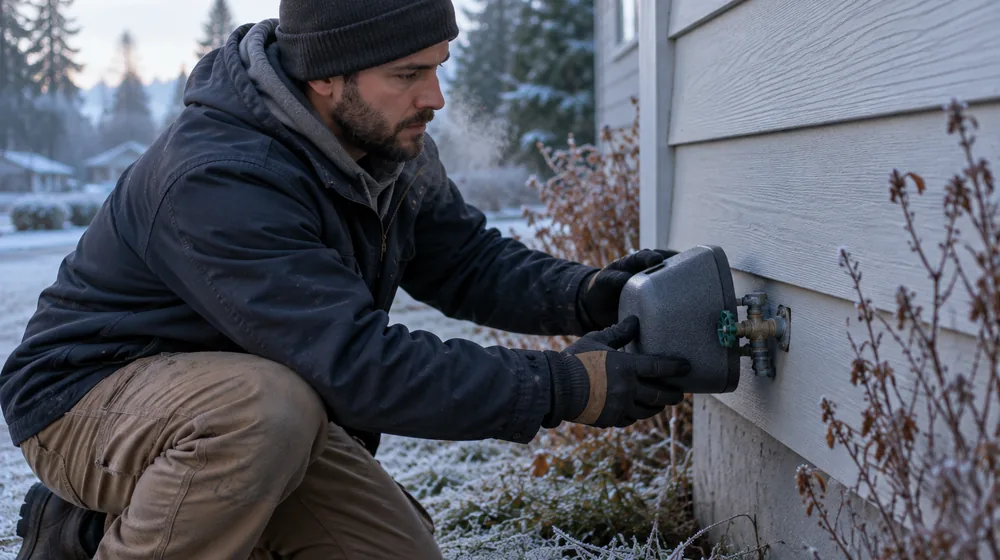
Winterizing Plumbing in Oregon: A Regional Checklist
Generic winterizing advice is written for the Midwest and it is either overkill or dangerously inadequate depending on…
How Long Does a Water Heater Last? 8 Signs Yours Is Failing
A tank water heater in Oregon lasts eight to twelve years. Tankless runs fifteen to twenty. Most tanks give six to twe…
Low Water Pressure in the Whole House: Causes & Fixes
Low water pressure is one of the few plumbing problems you can diagnose properly for twelve dollars. A hose-bib gauge …
Related services
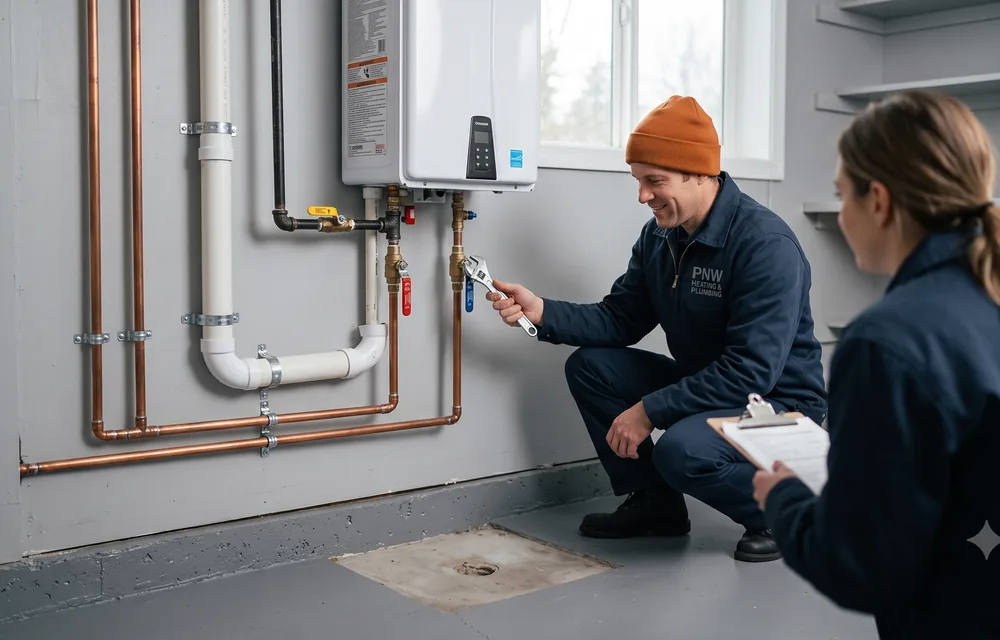
Tankless Water Heater Installation
Tankless is a genuinely better appliance for the right house and a frustrating, expensive mistake in the wrong one.
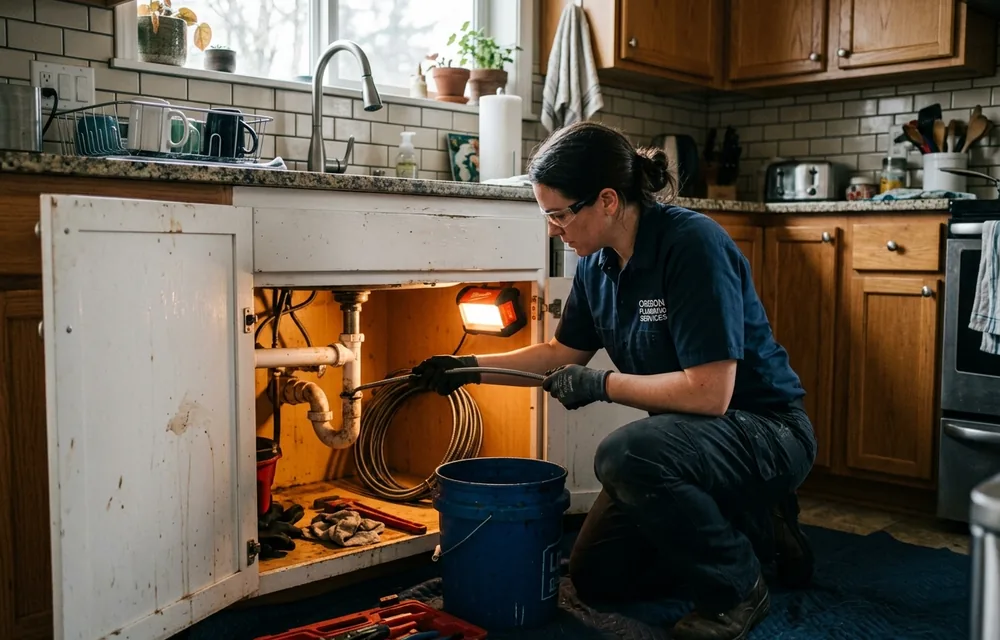
Drain Cleaning
A single slow sink is a nuisance.
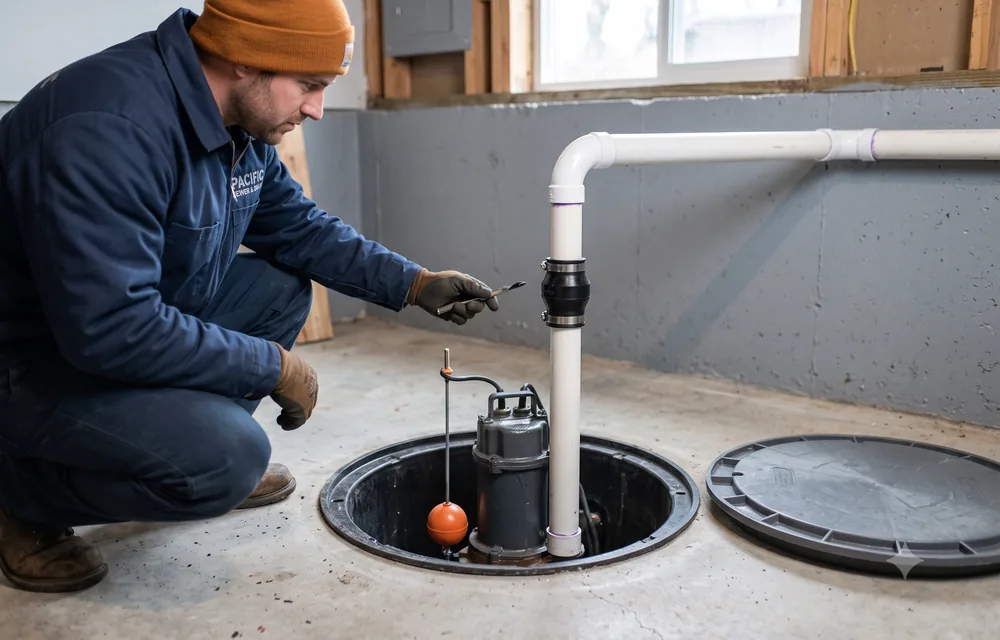
Sump Pump Installation & Repair
A sump pump is the only appliance in your house whose failure you discover at the worst possible moment, in the dark, during a storm, usually after the power has already gone out.
Water Service Line Replacement
The water service line is the pipe carrying potable water from the meter to your house.
Water Heater Repair & Replacement across Oregon
Water Heater Repair & Replacement is covered in 26 Oregon cities. Each local page sets out the housing stock and pipe materials specific to that area.