The sewer cleanout: where to find it, what the cap does, and why it decides the price of every main-line visit
A sewer cleanout is a capped pipe that gives direct access to your main sewer line without going through the house. It is the single most useful thing a property can have when a main line blocks: with one, a cable machine or a camera goes straight in at ground level. Without one, somebody is pulling a toilet off its flange and resetting it afterwards, on this visit and every future visit.
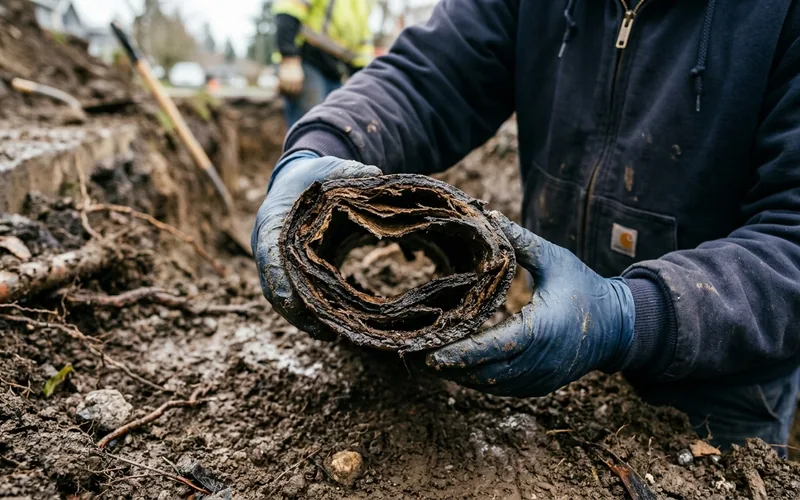
What a cleanout actually is
It is a short branch of pipe teed off the main line and brought up to an accessible point, finished with a removable cap. Nothing flows through it in normal use. It exists purely so that a drain line can be entered, cleared and inspected from outside the fixtures.
Most Oregon properties have at least one, and many have several: one near where the building drain leaves the house, sometimes one at the property line where the lateral meets the public sewer, and often one inside at the base of a stack or in a crawlspace.
The governing rule in Oregon is the plumbing code. Portland Permitting & Development, in its 2025 residential sewer inspection guide, puts it plainly for any permitted sewer work in the city: "All required cleanouts shall be installed per 719.0 of the 2023 OPSC." The same guide requires sewers to be laid at "a minimum grade of ¼″ per foot" under OPSC section 718.1, and to be properly bedded under 718.2. Those three requirements are why a repair done properly looks boring on camera years later.
How to find yours
Ten minutes with a garden fork before you ever need it is worth more than any advice on this page. Look for a capped pipe, usually 3 or 4 inches across, in these places in roughly this order:
- In the front or side yard, on the line between the house and the street. Often a round or square plastic or concrete box set flush with the ground, sometimes a plain pipe with a threaded cap standing a few inches proud.
- Close to the foundation, on the side of the house where the bathrooms and kitchen are, since that is usually where the building drain exits.
- In the garage or a utility room, at floor level, sometimes tucked behind stored boxes.
- In the crawlspace or basement, near where the main line leaves the building.
- In an older Oregon home, possibly nowhere at all. Plenty of pre-war houses were built without an exterior cleanout, and it was never added.
Once you find it, mark it. A short stake, a paver, a note in the house file: anything that means the next person does not spend the first twenty minutes of an emergency probing the lawn with a screwdriver. If it is buried under sod, a riser can bring it to grade permanently.
Caps, covers, plugs and boxes
The words get used interchangeably, and they are different parts.
The cap or plug is what seals the cleanout opening itself: usually a threaded plastic or brass plug, or a plastic cap. The cover or box is the protective housing around it at ground level, which keeps soil and mower blades off the cap and makes it findable.
A missing cap is not cosmetic. An open cleanout lets soil, bark dust, leaves and yard debris fall directly into the sewer line, where it settles in the low spots and starts the next blockage. It gives roots an easy entry point. In heavy rain it takes surface water straight into the sanitary sewer, which is exactly the inflow the system is not built to carry. And it lets sewer gas out at ground level, which is the usual explanation for a drain smell in a yard with no visible problem — our guide on a sewer smell around the house covers the others.
Replacing a missing cap is a few dollars at a plumbing supplier and five minutes of work. It is the cheapest maintenance on the entire drainage system.
Do not open it during a backup
One safety point, and it matters more than anything else here.
When a main line is blocked and the house has kept using water, the line between the blockage and the building is full, and it can be under pressure. Unscrewing the cleanout cap at that moment releases contaminated water at ground level, sometimes forcefully, sometimes over whoever is kneeling next to it.
If sewage is backing up, the sequence is: stop using water everywhere in the building, keep people and pets away from it, and call. Tell whoever arrives where the cleanout is rather than opening it yourself. Our sewer backup guide covers the first ten minutes in full.
There is one deliberate exception, and it belongs to the professional: releasing a blocked line at the cleanout on purpose, outside, is far better than letting it surface through a shower pan inside. That is a controlled decision with the right equipment and protection, not a homeowner job in flip-flops.
What it costs you not to have one
This is where a cleanout stops being plumbing trivia and starts being money.
With an accessible exterior cleanout, a main-line clearing is a straightforward visit: the machine goes in at ground level, the line gets cleared, water runs to confirm it drains, done. It sits at the low end of the published range on our drain and sewer pricing guide.
Without one, the line has to be entered somewhere else. In practice that means pulling a toilet off its flange, clearing through the closet bend, then resetting the toilet with a new wax ring. That is extra labour and extra parts on every single main-line visit for the life of the property, plus a roof-vent approach as the fallback when a toilet pull will not reach.
The same applies to diagnosis. A camera inspection needs an entry point too, and an exterior cleanout is the clean one. Portland's inspection guide even builds camera technique into its requirements for permitted repairs: video must show "water running while the camera is moving downstream (on the way out), and the water turned off while the camera is being pulled back." Getting that footage is straightforward from a cleanout and awkward without one.
So if a property has no cleanout and has needed the main line cleared more than once, adding one is usually the cheapest decision available. It is not free — it means excavating to the line, cutting in a fitting and bringing the riser to grade — but it is paid back across the visits that follow, and it makes every future camera run easier.
What moves the cost of adding a cleanout
We publish no flat figure for this, because the excavation decides it and no two are alike. What changes the number:
- Depth of the line. A lateral three feet down is a different job from one at eight feet.
- What is on top of it. Lawn is easy. A driveway, a patio, a mature ornamental or a retaining wall is not, and restoration is part of the price.
- Where it can go. The useful position is upstream of the likely blockage and reachable with a machine, not simply wherever digging is easiest.
- Pipe material. Cutting a fitting into sound PVC is routine. Cutting into old clay or cast iron, or into Orangeburg that is already deformed, is a different proposition and can turn the conversation toward sewer line repair instead.
- Permit and inspection. Portland requires that "Permits shall be obtained prior to the start of any work" for its residential sewer program, and other Oregon jurisdictions have their own requirements. Confirm with the local building department before work starts.
One efficiency worth knowing: if a section of line is being replaced anyway, adding or relocating a cleanout at the same time costs far less than doing it as its own excavation later.
What the cleanout tells a technician
Beyond access, the cleanout is a diagnostic instrument in its own right.
Standing water visible in the cleanout means the blockage is downstream of it, out toward the street. An empty cleanout with a backed-up house means the blockage is upstream, between the house and the cleanout. That single observation narrows the job before any machine starts.
Where the cable stops, measured from the cleanout, is the footage that matters. A cable that stops at the same distance on every visit is not meeting a clog; it is meeting a defect. Portland's guide lists exactly that category of fault as an inspection failure for new work: "Any bellies, offset connections, improper materials, or other deficiencies will result in inspection failure." In an existing line, the same conditions are what a camera is looking for.
What comes back on the cable — fine root hair, heavy root mass, grease, silt, or fragments of pipe wall — points at the cause, and the cause decides whether the answer is rooter service, hydro jetting, or a repair.
Keeping it useful
Find it and mark it
Before you need it. A stake, a paver or a photo in the house file saves twenty minutes at the worst possible moment.
Keep the cap on and intact
A few dollars. It keeps debris, roots and surface water out of the line, and sewer gas in it.
Keep it at grade and clear
Do not let landscaping, a new deck, bark dust or a fence post bury or block it. A cleanout you cannot reach is a cleanout you do not have.
Add a riser if it is buried
If the cap sits below grade, bringing it up to a box at ground level converts every future visit from an excavation into a five-minute connection.
Note the footage after any visit
Ask where the cable or camera stopped and write it down. Compared against the next visit, that number is the difference between a recurring clog and a diagnosed defect.
Add one if the property has none
Especially after a second main-line call. It pays back over the visits that follow, and it makes camera work straightforward.
Frequently asked questions
Where is my sewer cleanout?
Look for a capped pipe three or four inches across, usually in the front or side yard on the line between the house and the street, often in a round or square box set flush with the ground. Failing that, check close to the foundation on the bathroom side of the house, in the garage at floor level, or in the crawlspace or basement near where the main line exits. Some older Oregon homes have no exterior cleanout at all.
What happens if my house does not have a cleanout?
Main-line work has to be done through another access point, which usually means pulling a toilet off its flange and resetting it with a new wax ring afterwards, or working through a roof vent. That adds labour and parts to every main-line visit for the life of the property, so if the line has needed clearing more than once, adding a cleanout is normally the cheaper long-run decision.
Can I open the sewer cleanout myself?
Not during a backup. A blocked line can hold contaminated water under pressure, and unscrewing the cap releases it at ground level onto whoever is kneeling there. If sewage is backing up, stop using water, keep people away, and tell whoever attends where the cleanout is rather than opening it. Replacing a missing cap on a line that is draining normally is fine.
Does adding a sewer cleanout need a permit in Oregon?
Usually yes, and it varies by jurisdiction. Portland's residential sewer program states that permits shall be obtained prior to the start of any work, and requires cleanouts to be installed per section 719.0 of the 2023 Oregon Plumbing Specialty Code. Confirm the requirement with your own city or county building department before work begins.
Why does a missing cleanout cap matter?
An open cleanout takes in soil, leaves, bark dust and surface water, all of which settle in the line and start the next blockage, and it gives roots a direct way in. It also lets sewer gas escape at ground level, which is a common explanation for a drain smell in a yard. A replacement cap costs a few dollars.
Services mentioned in this guide
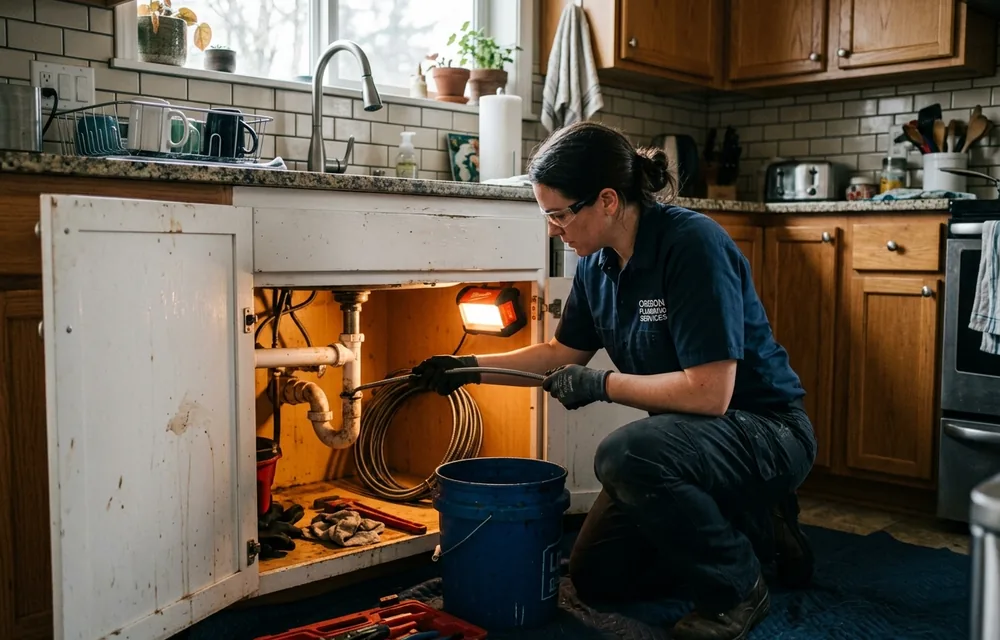
Drain Cleaning
A single slow sink is a nuisance.
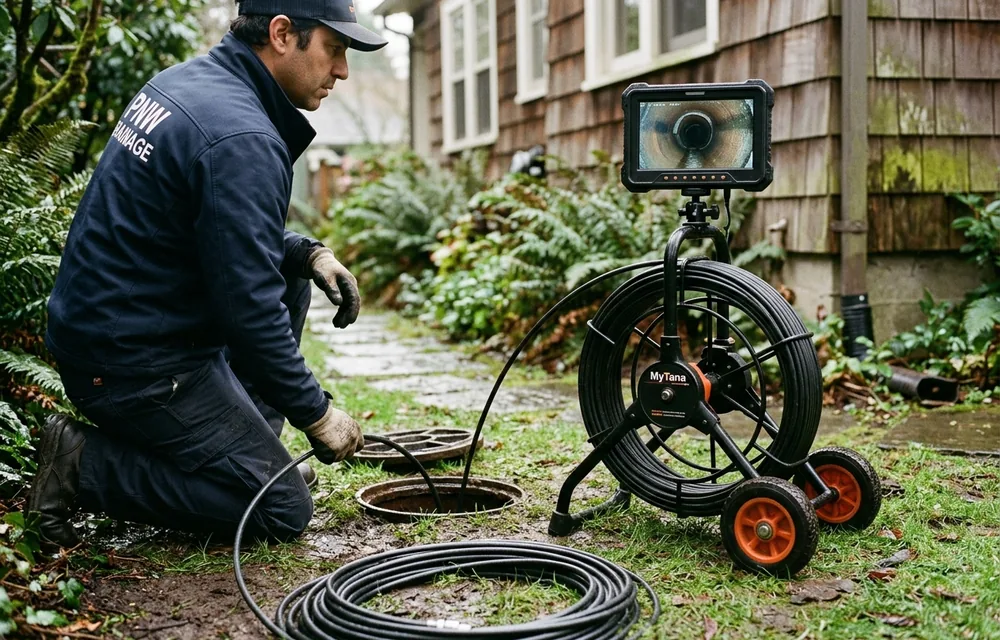
Sewer Scope & Camera Inspection
A sewer scope is the cheapest insurance in real estate and the only defensible basis for an excavation quote.
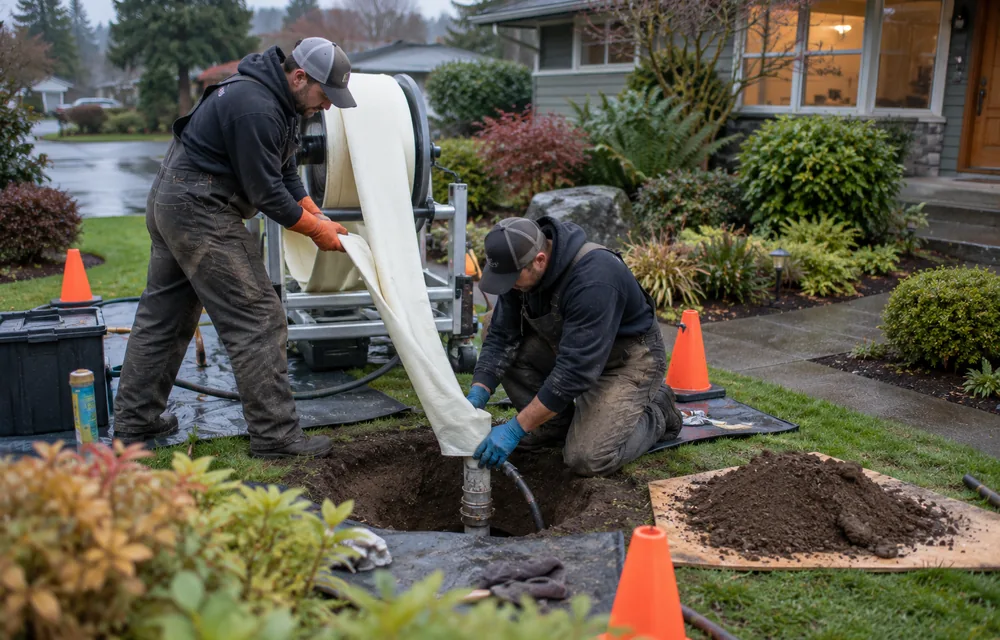
Sewer Line Repair & Replacement
Sewer replacement is the largest unexpected bill most Oregon homeowners ever face on their plumbing.
Related guides
Why Your House Smells Like Sewer (and How to Fix It)
A sewer smell in your home is never mysterious. Your drain system is a sealed loop that vents above the roof, so if yo…
How to Unclog a Drain Yourself (and When to Stop)
Most single-fixture clogs are genuinely a DIY job. Here is what works, in the order a plumber would try it — and the p…
Sewer Backup: What to Do in the First Ten Minutes
A main line backup gets measurably worse with every gallon of water the household uses. What you do in the first ten m…