Sewer Line Repair & Replacement in Oregon — Trenchless Where It Fits
Sewer replacement is the largest unexpected bill most Oregon homeowners ever face on their plumbing. It is also the one most often oversold. The smallest repair that actually solves the problem is usually the right one, and the footage should justify whatever is proposed.
- 1 to 3 days
- Statewide Oregon
- 7 days a week
Signs you may need sewer line repair & replacement
Most people arrive here describing a symptom rather than naming a service. These are the three that point this way.
Backups are getting closer together
A shortening interval between failures is a line degrading, not a line that needs cleaning more often. The trend matters more than any single event.
A camera has already found a break, belly or collapse
Once a defect is documented, the question is which repair method fits — spot repair, lining, bursting or open trench — not whether one is needed.
Problems that track the weather
A line that only backs up during sustained Willamette Valley rain is admitting groundwater through cracked joints. That gets worse every season it is left.
Four ways to fix a lateral, from cheapest to most invasive
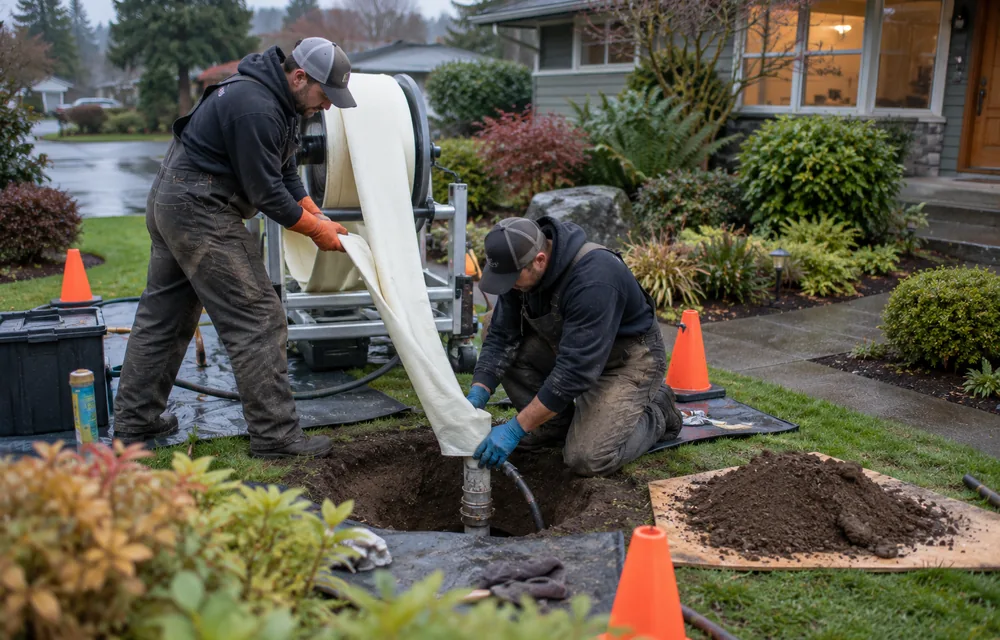
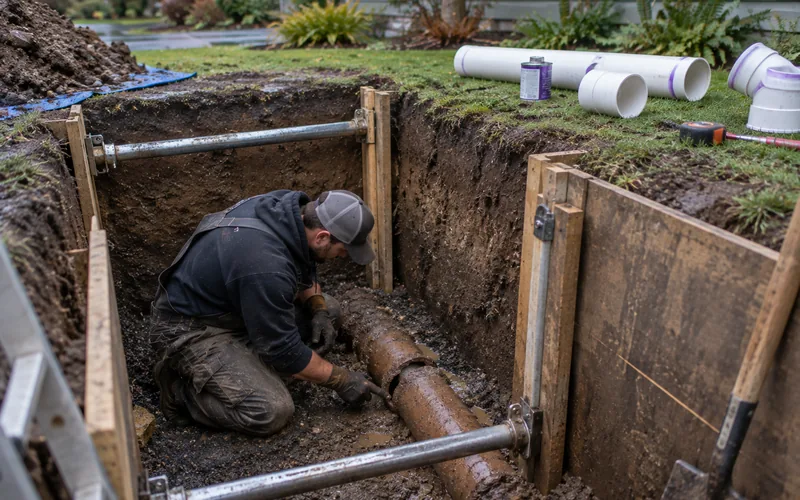
Spot repair (dig one hole). If the failure is a single offset joint, a crushed section, or one cracked segment, and the rest of the line scopes clean, you dig one access pit and replace three to eight feet. This is the right answer far more often than the industry admits, and it is the option a replacement-focused contractor will not lead with.
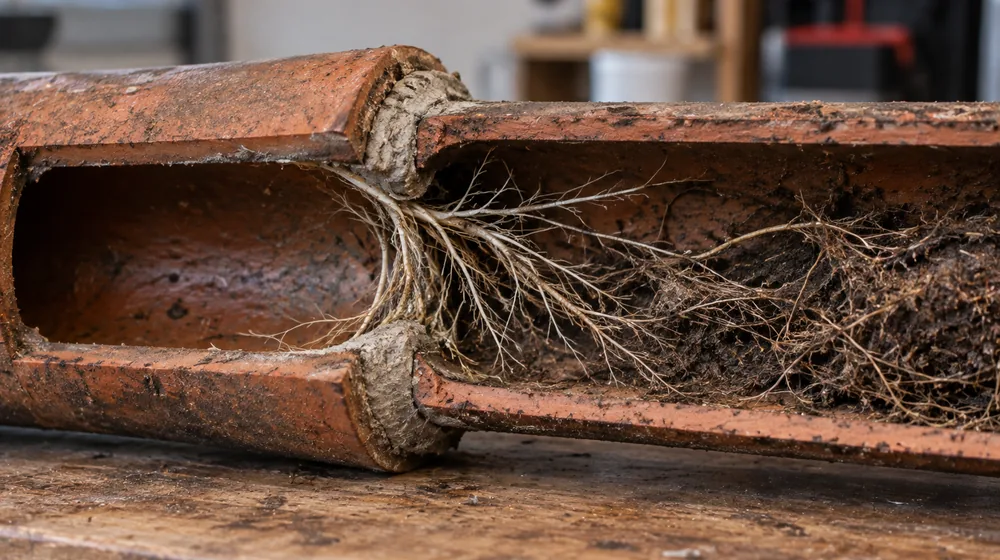
CIPP lining (cured-in-place pipe). A resin-saturated felt liner is inverted into the existing pipe and cured into a new jointless pipe inside the old one. No trench beyond the access points. Ideal for root intrusion, because it seals every joint at once. Requires a host pipe that is still round and structurally present, and a thoroughly jetted, clean interior. It slightly reduces the inside diameter, which is usually irrelevant on a residential lateral.
Pipe bursting. A bursting head is pulled through the old line, fracturing it outward while simultaneously drawing new HDPE pipe in behind. Needs an entry and exit pit but no continuous trench. This is the answer when the old pipe is too far gone to line — collapsed sections, Orangeburg, badly deformed clay. It can also upsize the line.
Open trench. Still correct sometimes: multiple failures spread along the run, a severe belly that must be re-graded (no trenchless method fixes bad slope), rerouting around a new obstruction, or ground conditions where bursting would endanger a neighbouring utility.
What actually drives your price
| Factor | Effect on cost | Why |
|---|---|---|
| Depth of line | Large | Beyond about 5 feet, shoring and safety requirements escalate sharply |
| Run length | Large | Priced substantially by the linear foot for every method |
| Surface to restore | Large | Turf is cheap; a driveway, sidewalk or mature landscaping is not |
| Pipe material | Moderate | Orangeburg and collapsed clay rule out lining, forcing burst or trench |
| Grade problems (belly) | Moderate | Must be trenched and re-graded; lining preserves the bad slope |
| Permit and inspection | Small but mandatory | Right-of-way work needs a permit in every Oregon jurisdiction |
| Other buried utilities | Variable | Gas, water, fibre crossing the run require hand-digging |
| Tree preservation | Variable | Protected or heritage trees can force trenchless regardless of price |
Spot repairs commonly land in the $2,200 to $5,000 range. Full lateral replacement or lining commonly runs $8,000 to $18,000, and deep, long, or hard-surface runs exceed that. Anyone giving you a firm number before scoping and locating your line is guessing.
Who pays for what in Oregon
The rule that surprises people: the sewer lateral is a private asset even where it runs under a public street. The exact division differs by jurisdiction, so confirm yours before assuming.
- Portland splits responsibility between the city and the property owner, with the division set out in City Code Chapter 17.32 and Administrative Rule ENB-4.17. Lateral repairs and connections in the right-of-way require a UR or UC permit.
- Bend assigns the property owner the sewer service from the main into the property, including any private pump on a pressure system. The city funds the main in the right-of-way.
- Oregon City operates a lateral repair program that assists property owners with sewer connection repairs.
- Eugene and Springfield handle local collection while the regional Metropolitan Wastewater Management Commission operates treatment and transmission. The private lateral remains the owner’s.
Two practical consequences. First, check whether your homeowner’s policy covers service lines — many Oregon carriers sell a service-line endorsement for a modest annual premium, and it is dramatically cheaper than the repair. Second, check whether your city offers a repair assistance or low-interest loan program before you finance privately. Ask about both before you finance anything privately, and verify with the city directly, because programs change.
How a repair should be scoped
Camera and locate
Recorded video, footage marks on every defect, surface locate with depth. No quote without this.
Call in the utility locate
Oregon law requires notification before excavation. 811 gets called and the locate period is waited out. A contractor offering to dig tomorrow has skipped this, and that is a reason to walk.
See every viable option
Spot repair, lining, bursting and open trench, side by side — including the cheaper ones. A single-option recommendation on a job this size is worth questioning.
Pull the permit
Jurisdiction permitting and the required inspections are part of the job. Ask who is pulling it. Unpermitted sewer work surfaces at resale and it is expensive then.
Execute and protect
Site protection, shoring where depth requires it, and a written restoration scope so there is no argument about the lawn afterward.
Final camera and documentation
Post-repair footage, the signed inspection card, and warranty paperwork you can hand to a future buyer.
Get a second opinion. Genuinely.
If you have been told the whole line has to come out, get an independent camera scope before you sign anything. Sometimes the recommendation holds, and then you go back to the first contractor with confidence. Sometimes a $14,000 replacement is a $3,000 spot repair.
Bring the other contractor’s video if you have it. If they would not give you one, that itself is worth weighing.
Frequently asked questions
How much does sewer line replacement cost in Oregon?
Spot repairs typically run $2,200 to $5,000. Full lateral lining or replacement commonly runs $8,000 to $18,000, driven mostly by depth, run length and what surface has to be cut and restored. Deep runs under a driveway or a mature landscape can exceed that range. No honest figure exists before a camera inspection and a locate.
Is trenchless sewer repair cheaper than digging?
Not always cheaper per foot, but usually cheaper in total once restoration is counted — you are not rebuilding a driveway, a sidewalk or an established garden. Where the run is short, shallow and under plain lawn, open trench sometimes wins outright. Ask for both priced side by side so you can see the actual comparison rather than take anyone at their word.
Can every sewer line be lined?
No. CIPP lining needs a host pipe that is still round and structurally present. Collapsed sections, severely deformed Orangeburg, and lines with a significant belly are not linable — lining preserves the existing slope, so it cannot fix bad grade. Those situations call for pipe bursting or open trench.
Who is responsible for the sewer lateral in Oregon?
The property owner, for at least the private-property portion, and in many jurisdictions out to the connection at the public main. Portland sets its split in City Code 17.32 and requires a UR or UC permit for right-of-way lateral work; Bend assigns the owner the service from the main into the property; Oregon City runs an assistance program. Rules differ by city — confirm yours with the utility before assuming.
Does homeowners insurance cover sewer line replacement?
Standard policies generally do not cover gradual failure, root intrusion or normal deterioration. Many Oregon carriers do sell a separate service-line endorsement that covers buried water and sewer lines, usually for a small annual premium. Check your declarations page for it — the endorsement is far cheaper than the repair and many homeowners have it without realising.
How long does a sewer replacement take?
A spot repair is often a single day. A full trenchless lining or bursting job typically runs one to three days including permitting inspections. Open-trench replacement of a long or deep run can go longer, particularly if hard-surface restoration is involved. You will have water service throughout; sewer use is interrupted only during active work.
Do I need a permit to replace my sewer line in Oregon?
Yes, in every Oregon jurisdiction, and any work in the public right-of-way requires additional permitting — Portland uses UR and UC permits for exactly this. Permits are pulled and inspections scheduled as part of the job. Unpermitted sewer work reliably resurfaces during a future sale, and resolving it then is far more expensive.
Guides that cover this in more depth
Sewer Backup: What to Do in the First Ten Minutes
A main line backup gets measurably worse with every gallon of water the household uses. What you do in the first ten m…
Tree Roots in Your Sewer Line: Why Oregon Has It Worst
Roots do not break into a healthy pipe. They find the joint that is already leaking. Understanding that single fact te…
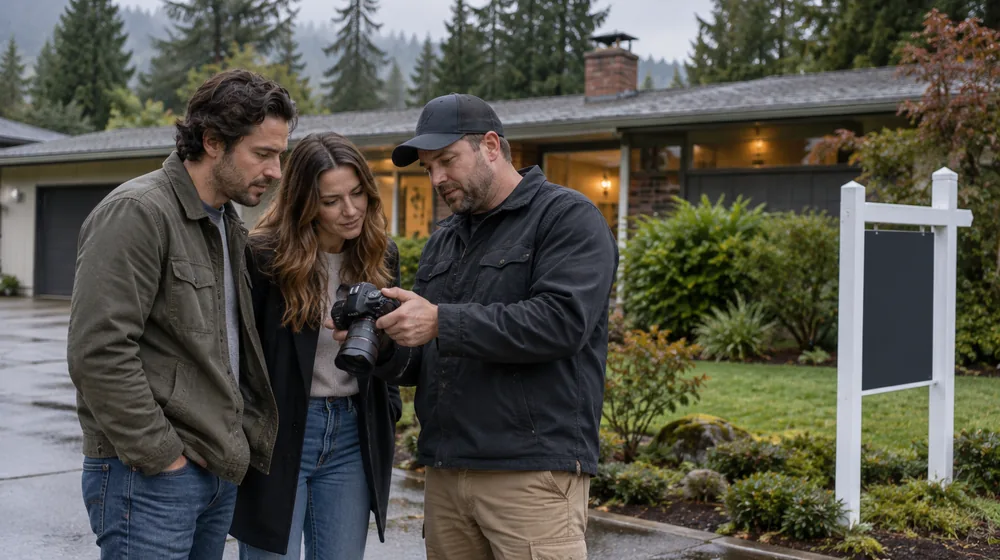
Why You Need a Sewer Scope Before Buying an Oregon Home
Roughly $250 during your inspection contingency, to find out whether you are buying a $600 cleaning or a $14,000 repla…
Related services
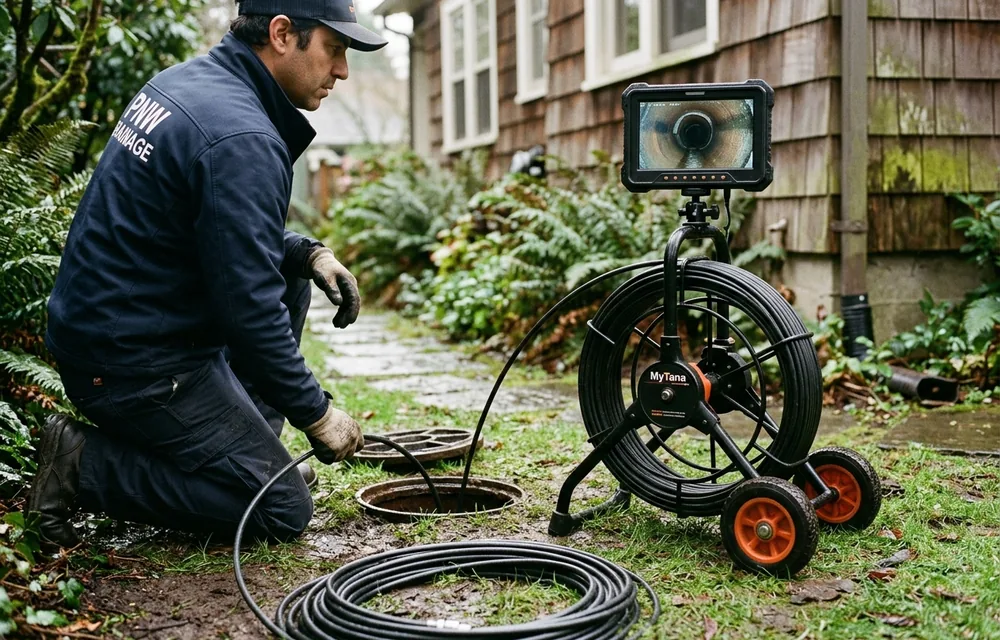
Sewer Camera Inspection
A sewer scope is the cheapest insurance in real estate and the only defensible basis for an excavation quote.
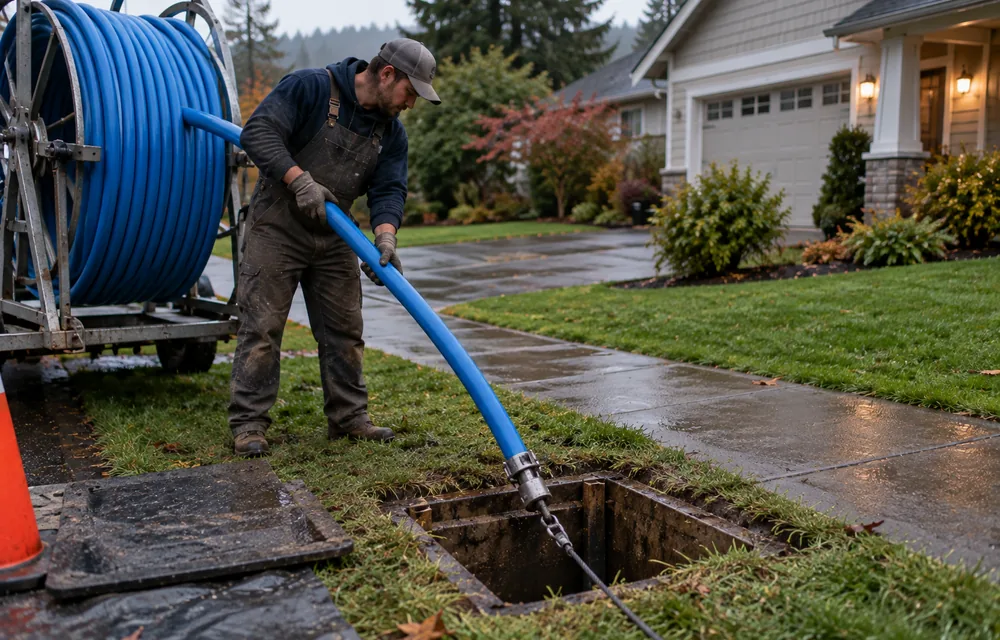
Water Service Line Replacement
The water service line is the pipe carrying potable water from the meter to your house.
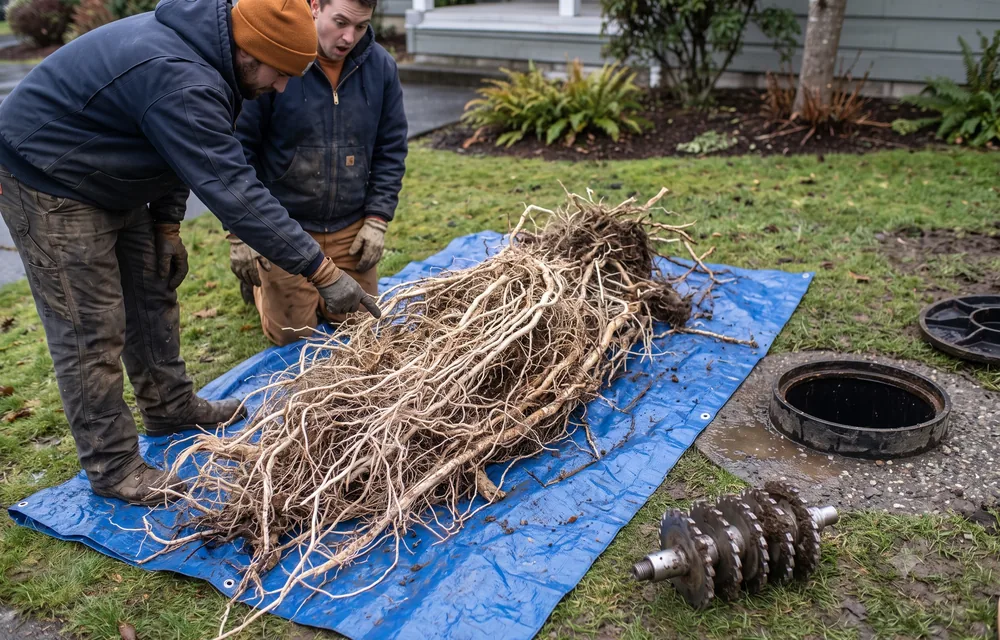
Rooter Service & Tree Root Removal
Roots do not break into a healthy pipe.
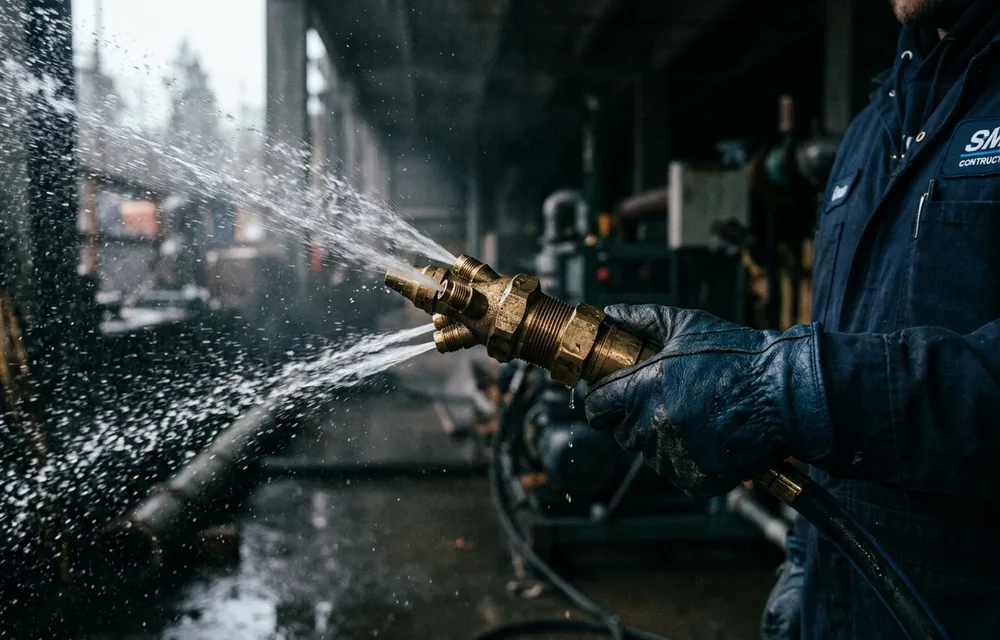
Hydro Jetting
A cable bores a hole through the clog.
Sewer Line Repair & Replacement across Oregon
Sewer Line Repair & Replacement is covered in 26 Oregon cities. Each local page sets out the housing stock and pipe materials specific to that area.