What drain and sewer cleaning actually costs in Oregon
Most residential drain cleaning in Oregon runs $149 to $450, and the single biggest factor is not the clog — it is whether the job is one fixture or the whole house, and whether there is an accessible cleanout. Everything below is the range each job usually falls in, what pushes it to either end, and the few decisions that genuinely change the number.
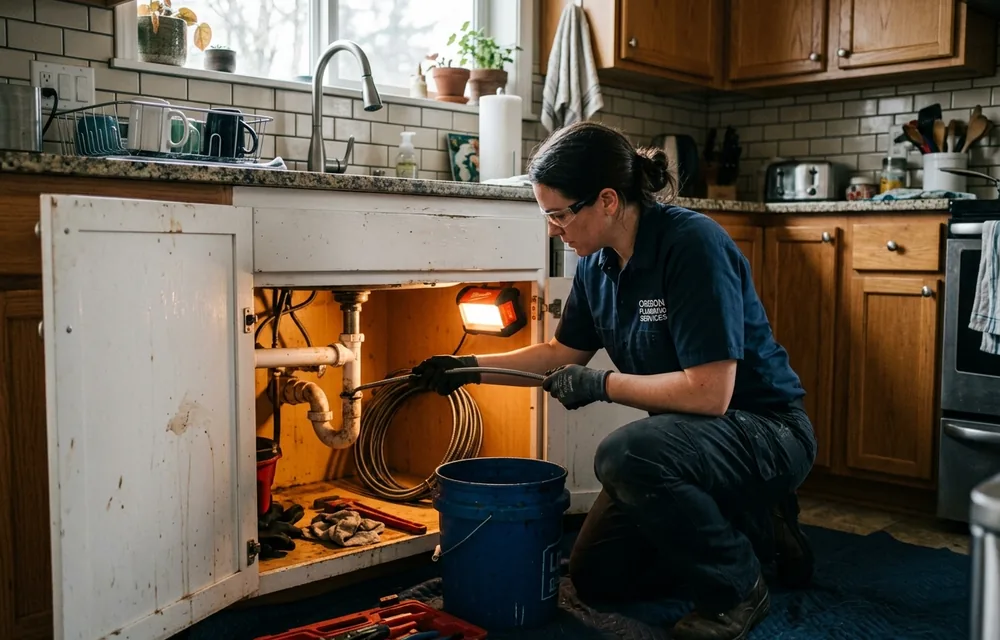
What each job costs
| Work | Typical range | Time on site |
|---|---|---|
| Drain Cleaning | $149 – $450 | 45 minutes to 3 hours |
| Rooter Service & Tree Root Removal | $275 – $650 | 1.5 to 3 hours |
| Hydro Jetting | $350 – $900 | 2 to 4 hours |
| Sewer Scope & Camera Inspection | $195 – $425 | 45 to 90 minutes |
| 24/7 Emergency Drain & Sewer Service | $249 – $750 | Dispatched immediately |
| Sewer Line Repair & Replacement | $2,200 – $18,000 | 1 to 3 days |
These are guide figures for planning, not quotes: the property decides the final number, and nobody can price a main line honestly over the phone without knowing where the cleanout is and what the line is made of. Nights, weekends and holidays carry a disclosed dispatch premium on top of the standard rates.
The spread inside each row is real, not padding. A main line with an exterior cleanout and a soft blockage sits near the bottom. The same line with no cleanout, a pulled toilet and a heavy root mass sits near the top.
Fixture or main line: most of the price is decided here
Before anything else, work out which one you have, because it changes the cost by roughly a factor of three.
A fixture clog affects one drain while everything else runs normally. The blockage is within a few feet of that fixture, the tool is a small hand or drum auger, and the visit is short.
A main-line clog shows up as several fixtures failing together: a toilet bubbling when a sink drains, a shower filling when the washer empties, a floor drain backing up. That is the building drain or the lateral, it needs a large cable machine or a jetter run from a cleanout, and it is priced as main-line work. Our drain cleaning page covers the test in detail, and the symptom diagnostic walks you through it in a couple of minutes.
People often search for a "sewer cleaning cost" or a "sewer snaking cost" separately, but that is the same main-line job under a different name. The figure to plan against is the main-line range, not the fixture range.
The six things that move the number
- Access. This is the biggest lever you control. An exterior cleanout keeps a main-line job at the low end. No cleanout means pulling a toilet and resetting it with a new wax ring, or working through a roof vent, and that is labour added to every future visit too.
- What is actually in the line. A soft grease or paper blockage clears quickly. A mature root mass is cutting work, and cutting takes time.
- Pipe material and condition. Cast iron that has gone rough and scaly grabs the cable and slows everything down. A line with an offset joint may not be clearable at all, which turns the visit into a camera inspection instead.
- Time of day. After-hours dispatch carries a premium, disclosed before a truck leaves. A slow single fixture can wait for a weekday slot; an active backup cannot.
- How long it has been ignored. A line cleared annually clears fast. A line nobody has touched in fifteen years is a different job.
- Distance. Remote coastal and Eastern Oregon addresses carry longer drive time than metro ones.
When jetting is worth the extra, and when it is not
Cabling and jetting solve different problems, and paying for the wrong one is the most common way to spend twice.
A cable machine punches through a blockage and pulls back what it can grab. It is the right tool for a discrete obstruction and the cheaper visit.
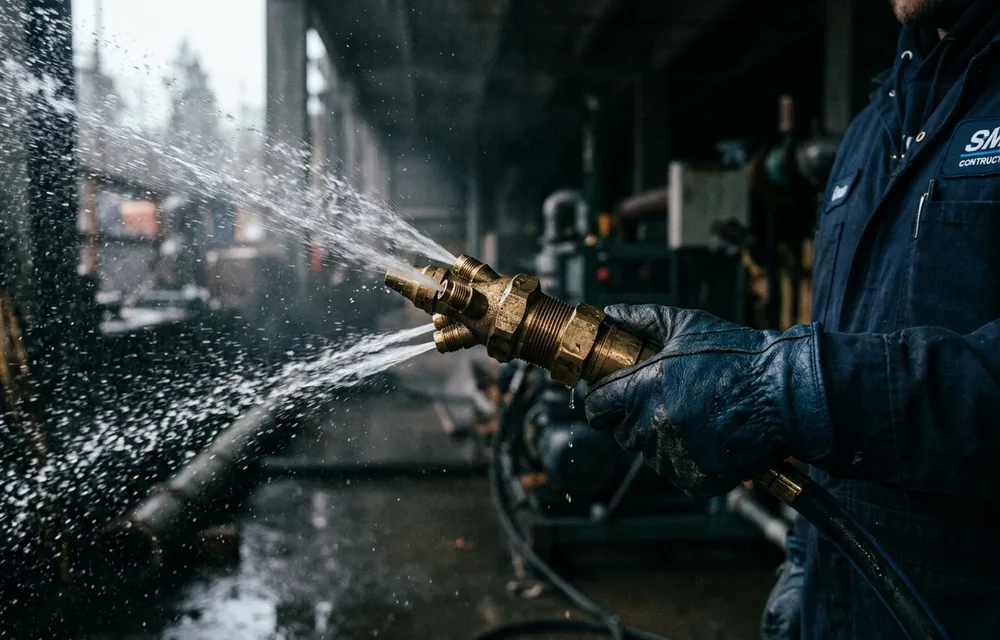
Hydro jetting scours the pipe wall back toward bare material. It costs more and it is the right answer when the pipe is coated rather than plugged: grease-heavy kitchen lines, commercial kitchens, and any line that has now clogged more than once in two years. Paying for jetting once often replaces three cabling visits.
It is not universally safe. On a line that is already structurally compromised, jetting pressure can make things worse, which is why a camera comes first on old or unknown pipe. The jetting or snaking tool gives a straight answer for your situation, including the cases where it says spend less.
What a camera inspection costs, and when to insist on one
A camera inspection is priced separately and is normally credited against a repair that follows. The times it is worth paying for on its own:
- The same line has clogged three times in two years. You are buying repeat cleanings for a structural problem.
- The cable stops at the same footage every visit. That is an offset, a belly or a partial collapse, not a clog.
- Before buying a house, particularly anything built before 1975. A sewer scope is the cheapest way to discover a five-figure problem while the price is still negotiable.
- Before jetting an old line, to confirm the pipe can take it.
Refusing a camera and paying for another cabling is a reasonable choice once. It stops being reasonable the third time.
The jobs that are an order of magnitude bigger
Cleaning is maintenance. Repair is capital work, and it is worth knowing where the cliff is.
A sewer line repair or replacement runs $2,200 to $18,000 depending on depth, length, surface restoration and whether trenchless methods fit the route. That is the number behind the advice to camera a line rather than clear it for the fourth time.
A blocked line is not automatically a failing one. Plenty of lines clear and stay clear for years. But if the camera shows Orangeburg, a collapse or roots entering through a broken joint, cleaning buys months, not years, and the honest comparison is between another cleaning every spring and fixing it once.
Why the same clog costs differently around Oregon
The published ranges are statewide, but the job underneath them is not identical everywhere, and two things genuinely vary by region.
Drive time. Metro addresses are short runs. Remote coastal and Eastern Oregon properties, and rural acreage anywhere, carry longer travel, and on acreage the run of pipe itself is often far longer than a town lot's. Preventive work is meaningfully cheaper than emergency work when distance is involved, because the emergency version arrives at a premium.
What the local pipe is made of. Cost follows the housing stock. In Portland, inner-eastside clay tile with mature street trees over it means root cutting is the routine main-line job, and the Orangeburg-era postwar stock east of the city means a cleaning sometimes turns into a camera inspection instead. Mineral scale narrows lines in Bend and the rest of Central Oregon, so lines there foul faster between visits. Coastal properties in Coos Bay and the sandy strip take in fine sediment through failed joints, which settles in the low spots and comes back on a schedule.
None of that changes the price band for a given job. What it changes is how often a property lands in the band, which over a decade matters more than the figure on any one invoice.
What the figure does and does not include
Included in a cleaning: the visit, the diagnosis of which line is blocked, the machine work to clear it, and running water to confirm the line actually drains before anyone leaves.
Priced separately: camera inspection, any repair, and pulling and resetting a toilet where there is no other access. Each is explained on the phone or on site before it starts, not discovered on the invoice.
Not included, because it is a different trade: sewage cleanup and restoration of damaged flooring and walls after a backup, and septic tank pumping, which in Oregon requires a DEQ sewage disposal service licence. Our septic tank pumping guide explains the split and what part of a septic property is plumbing work.
If conditions on site differ materially from what was described on the phone, work stops and the change is discussed before it resumes. That is the practice that keeps a range honest.
How to keep the bill at the low end
Have a cleanout fitted
If the property has no accessible exterior cleanout, adding one pays for itself over the next two main-line visits and makes every future call faster.
Call before it is an emergency
A slow drain booked for Tuesday morning is cheaper than the same line at 11pm on Sunday. Gurgling and slow drains are the warning; sewage on the floor is the bill.
Say what you have already tried
Particularly if you poured a chemical cleaner in. It changes how the line has to be opened and it is a safety issue for whoever opens it.
Know your own symptoms
One fixture or several? Does flushing affect another drain? Two minutes of observation moves you into the right price band before anyone arrives.
Deal with the cause once
A line that clogs every spring has a reason. Cutting roots annually is a legitimate maintenance plan; so is fixing the joint they enter through. Doing neither is the expensive option.
Keep grease out of the kitchen line
The cheapest drain cleaning is the one that never gets booked; see the kitchen grease guide.
Frequently asked questions
How much does drain cleaning cost in Oregon?
Most residential drain cleaning runs $149 to $450. A single accessible fixture drain sits at the low end; a main-line clog needing root cutting and toilet-pull access sits at the high end. After-hours calls carry a disclosed dispatch premium. Access is the biggest single factor: an exterior cleanout keeps the job cheap.
How much does it cost to snake a sewer line?
Main-line work — what people variously call sewer cleaning, sewer snaking or rooter service — is priced as a main-line job rather than a fixture drain, typically $249 to $650 depending on access and how much root cutting is involved. If there is no cleanout and a toilet has to be pulled and reset, expect the upper end.
Why is after-hours drain cleaning more expensive?
Because it is an unscheduled call-out, and the premium is disclosed on the phone before a truck leaves rather than added to the invoice afterwards. If your symptoms describe something that can safely wait, we will say so and book you at standard rates.
Is a camera inspection included in drain cleaning?
No, it is priced separately, and it is normally credited against a repair that follows. It is worth paying for when the same line has clogged repeatedly, when a cable stops at the same point every time, before buying a house, or before jetting a line of unknown condition.
What is the cheapest way to deal with a recurring clog?
Find out why it recurs. Repeat cleanings on a line with a structural defect cost more over three years than one camera inspection and the repair it points to. Where the cause is roots or grease rather than a defect, a scheduled annual cut or jet is genuinely cheaper than emergency calls.
Services mentioned in this guide
Drain Cleaning
A single slow sink is a nuisance.
Hydro Jetting
A cable bores a hole through the clog.
Sewer Scope & Camera Inspection
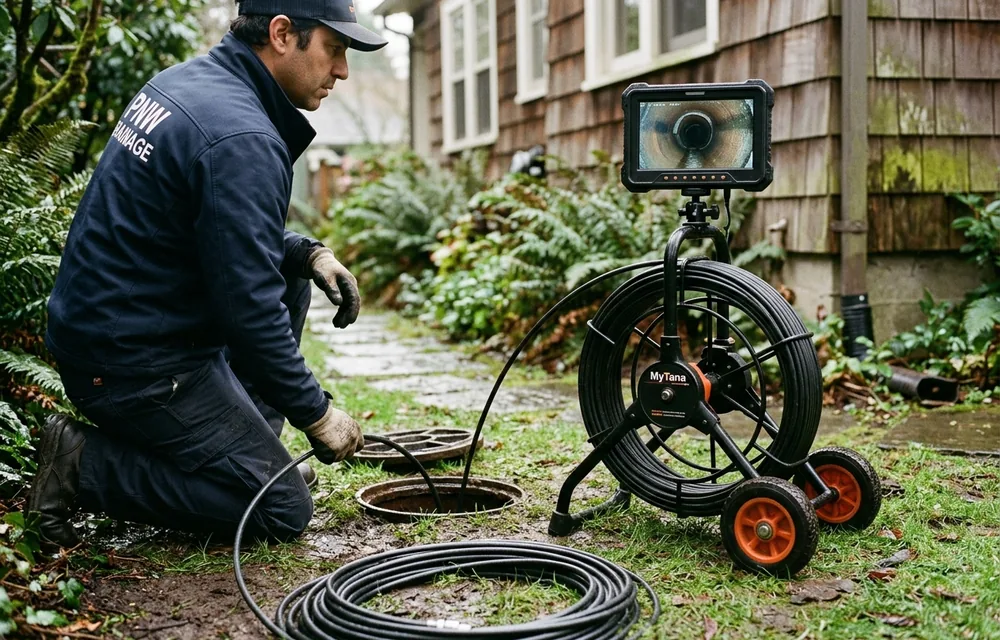
A sewer scope is the cheapest insurance in real estate and the only defensible basis for an excavation quote.
Related guides
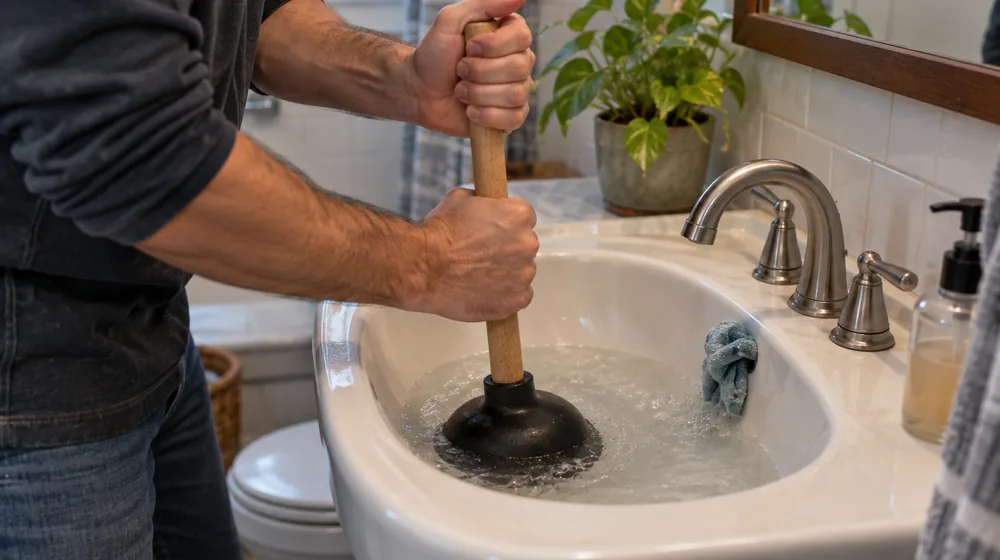
How to Unclog a Drain Yourself (and When to Stop)
Most single-fixture clogs are genuinely a DIY job. Here is what works, in the order a plumber would try it — and the p…

Grease and Kitchen Drains: Why Snaking Keeps Failing
A cable bores a hole through the middle of a grease coating and leaves the coating exactly where it was. That is why t…
Best Drain Cleaner (2026): What Actually Works
The best drain cleaner, or drain declogger as it is sometimes searched, is usually not a bottle. For the clogs most ho…