Sump Pump Installation & Repair in Oregon
A sump pump is the only appliance in your house whose failure you discover at the worst possible moment, in the dark, during a storm, usually after the power has already gone out. That last part is not a coincidence, and it is the reason to talk about backup.
- 3 to 6 hours
- Statewide Oregon
- 7 days a week
Signs you may need sump pump installation & repair
Most people arrive here describing a symptom rather than naming a service. These are the three that point this way.
Water in the basement or crawlspace after sustained rain
Oregon groundwater problems are duration-driven rather than intensity-driven. Days of moderate rain saturate soil more thoroughly than one heavy storm.
The pump runs constantly, or cycles every few minutes
Short-cycling usually means an undersized pump, a basin that is too small, or a check valve failing and letting discharge run back in.
Finished space below grade with no backup power
The storms that produce the highest groundwater inflow are the same storms that take down power lines. A mains-only pump is offline in exactly the conditions it exists for.
Why Oregon is hard on sump pumps
The Oregon rainfall pattern is unusually punishing for pumps, for a reason that is not obvious: it is not the intensity, it is the duration.
A Midwest thunderstorm dumps two inches in an hour and the pump runs hard for a few hours. A western Oregon winter delivers sustained rain over days or weeks, and the water table rises and simply stays up. The pump cycles continuously for weeks at a time. Duty cycles that a pump would tolerate for a summer storm accumulate into thousands of cycles in a single winter, and cheap pumps do not survive many seasons of it.
Regional variation matters. The Willamette Valley has heavy clay soils that shed water poorly and keep it against foundations. The coast combines extremely high rainfall with high water tables and sandy soil, so pumps run near-continuously all winter and sand entering the basin destroys impellers. Portland-area basements are frequently older with rubble or unsealed foundations that admit water through the walls, not just the floor. Central and Eastern Oregon are generally drier, but rapid spring snowmelt on frozen or saturated ground produces exactly the kind of sudden inflow that finds an undersized pump.
And crucially: the winter storms that drive the highest inflow are the same storms that knock down power lines. A pump without backup is offline precisely when it is needed most.
What a properly specified system contains
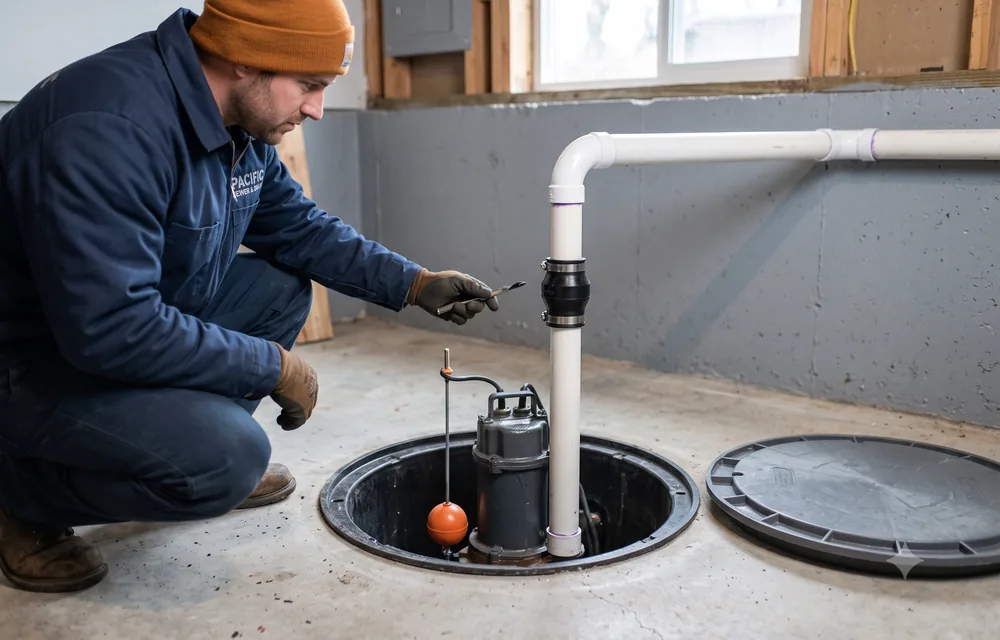
A cast-iron pump, not plastic. Cast iron dissipates motor heat far better, which matters enormously under Oregon’s long continuous duty cycles. Plastic-housed pumps overheat and thermally cycle themselves to death.
A correctly sized basin. Too small a basin means the pump short-cycles — starting and stopping constantly — and motor starts are what wear a pump out, not run time. Enlarging an undersized basin is often the single highest-value upgrade available.
A vertical or tethered float appropriate to the basin. Tethered floats need clearance to swing; in a narrow basin they hang up on the wall or the pipe. A hung float is a flooded basement with a perfectly functional pump sitting in it.
A check valve. Without one, everything in the discharge pipe drains back into the basin each time the pump shuts off, so the pump immediately re-pumps the same water. That doubles the cycle count for no benefit.
Discharge routed properly and freeze-protected. Discharge must terminate well away from the foundation, must not be routed into the sanitary sewer (prohibited in Oregon jurisdictions and it overloads the treatment system), and must not be able to freeze shut. A frozen discharge line means the pump runs against a closed pipe until it burns out.
Battery backup, or water-powered backup. The single most valuable addition in this state, for the power-outage reason above. A battery system gives several hours to a day of pumping. A water-powered backup uses municipal water pressure and runs indefinitely without electricity, though it consumes water and is unavailable on a well.
A high-water alarm. Ten to forty dollars. Tells you the pump has failed while the water is still in the basin rather than on the floor.
Crawlspaces, which is what most Oregon homes actually have
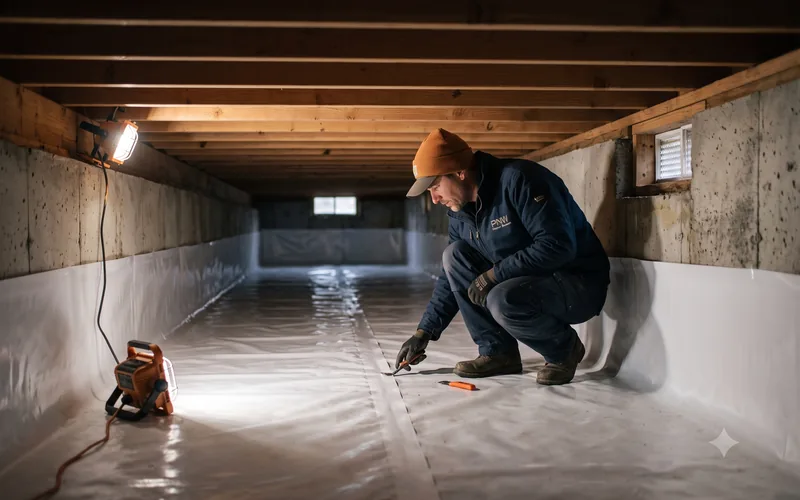
Full basements are less common here than in much of the country. Most Oregon homes sit over a crawlspace, and crawlspace water is a slower, quieter, more damaging problem than basement flooding because nobody sees it.
Standing water or saturated soil under a house produces wood rot in joists and subfloor, mould in insulation, elevated indoor humidity, and a reliable invitation to pests. The usual first sign is a musty smell in the house or floors that feel cold and damp in winter.
The correct fix is rarely just a pump. It is usually a combination: a properly lapped and sealed vapour barrier over the soil, corrected exterior grading and functioning gutter discharge so water is not being delivered to the foundation in the first place, perimeter drainage if the water is entering laterally, and then a sump and pump to remove what still arrives. Installing a pump while a downspout discharges two feet from the foundation is treating a symptom.
Testing and maintenance you can do yourself
Test it in September, not January
Pour five gallons into the basin and confirm the pump starts, moves water, and shuts off cleanly. Do this before the rain, when a replacement is a scheduled appointment rather than an emergency.
Check the float has clear travel
Reach in and lift it. It should move freely without touching the basin wall or the discharge pipe.
Clear the basin of debris
Silt, gravel and — on the coast — sand destroy impellers. Scoop it out annually.
Walk the discharge line
Confirm the outlet is clear, unfrozen, and directing water well away from the foundation rather than back toward it.
Test the backup separately
Unplug the primary pump and confirm the backup takes over. An untested backup is an assumption, not a system.
Replace batteries on schedule
Backup batteries last three to five years and fail silently. Diarise it.
Frequently asked questions
How much does sump pump installation cost in Oregon?
Replacing an existing pump in a serviceable basin typically runs $650 to $1,200. A full new installation including excavating a basin, gravel bed, discharge routing and check valve runs $1,400 to $2,400. Battery backup systems add roughly $700 to $1,500 depending on capacity.
How long does a sump pump last?
Seven to ten years is typical nationally, but Oregon’s long continuous winter duty cycles push many pumps toward the shorter end. Cast-iron pumps in correctly sized basins with check valves last considerably longer than plastic pumps that short-cycle. If yours is over seven years old, replace it before winter rather than during it.
Do I need a battery backup sump pump in Oregon?
If you have finished space or stored valuables below grade, yes — and the reason is specific to this climate. The winter storms that produce the highest groundwater inflow are the same storms that take down power lines. Without backup, your pump is guaranteed to be offline during exactly the conditions it exists for.
Can I discharge my sump pump into the sewer?
No. Connecting a sump pump to the sanitary sewer is prohibited in Oregon jurisdictions. It overloads the treatment system during storms and contributes to the sewer backups that flood other people’s homes. Discharge must go to grade well away from the foundation, or to a storm system where the city permits that connection.
Why does my sump pump run constantly?
Either genuine high groundwater, which is normal in a valley or coastal winter, or a fault. The common faults are a missing or failed check valve letting discharge water fall back into the basin, a stuck float, or an undersized basin causing short cycles. Constant running in dry weather is always worth diagnosing — the pump is wearing out for nothing.
My crawlspace is wet — do I need a sump pump?
Possibly, but rarely on its own. Start with where the water is coming from: gutters and downspouts discharging near the foundation, and grading that slopes toward the house, cause a large share of Oregon crawlspace water and are much cheaper to fix. A vapour barrier, corrected drainage, and then a pump for what remains is the durable sequence.
Guides that cover this in more depth
Related services
24/7 Emergency Drain & Sewer Service
If sewage is entering your home right now, stop reading and call.
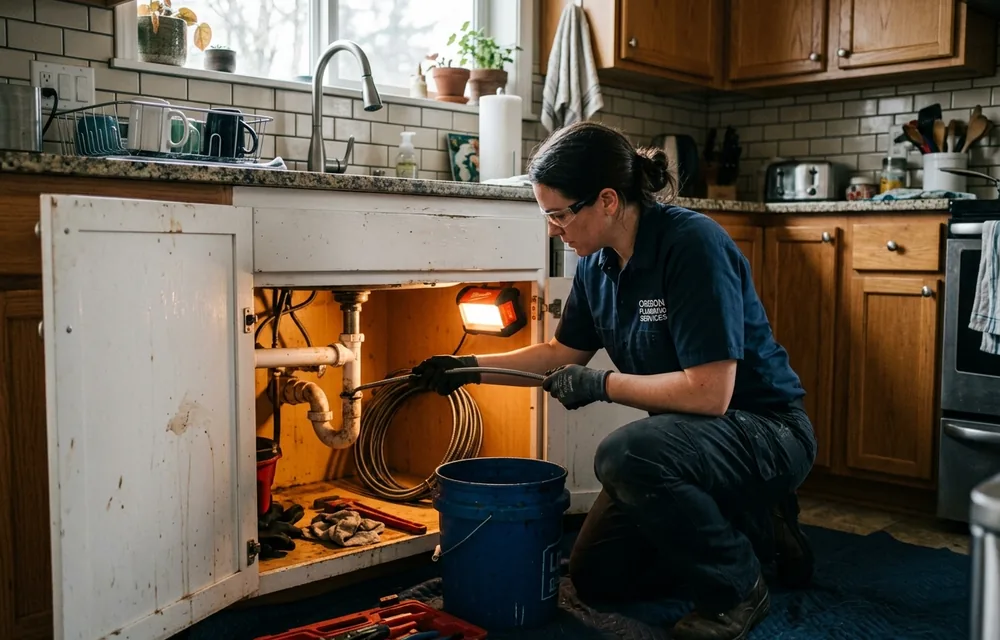
Drain Cleaning
A single slow sink is a nuisance.
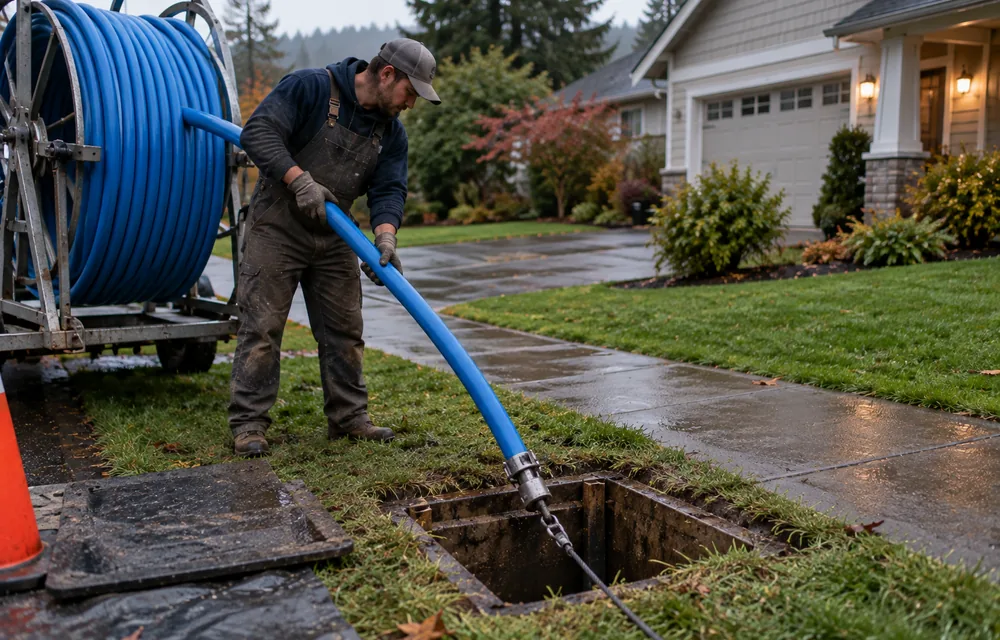
Water Service Line Replacement
The water service line is the pipe carrying potable water from the meter to your house.
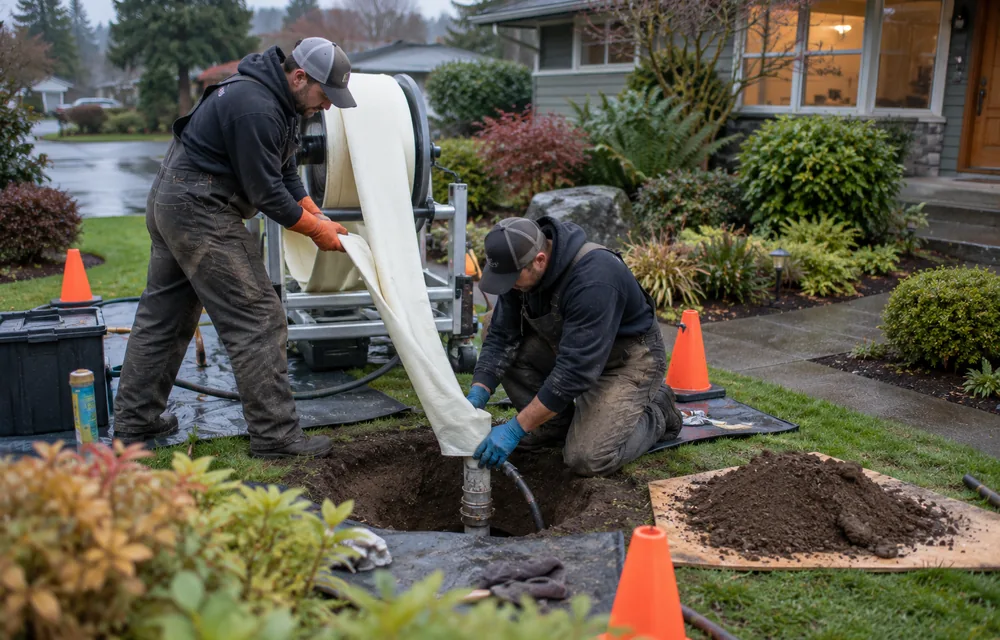
Sewer Line Repair & Replacement
Sewer replacement is the largest unexpected bill most Oregon homeowners ever face on their plumbing.
Sump Pump Installation & Repair across Oregon
Sump Pump Installation & Repair is covered in 26 Oregon cities. Each local page sets out the housing stock and pipe materials specific to that area.