French Drain Cleaning & Repair in Oregon
A French drain does not fail the way a sewer does. Nothing backs up into the house. The water simply stops going away: the lawn that used to dry out between storms stays soft for a week, the crawlspace is damp again, or a puddle forms against the foundation where it never used to. Most of the time the drain is not broken. It is full.
- 1 to 3 hours
- Statewide Oregon
- 7 days a week
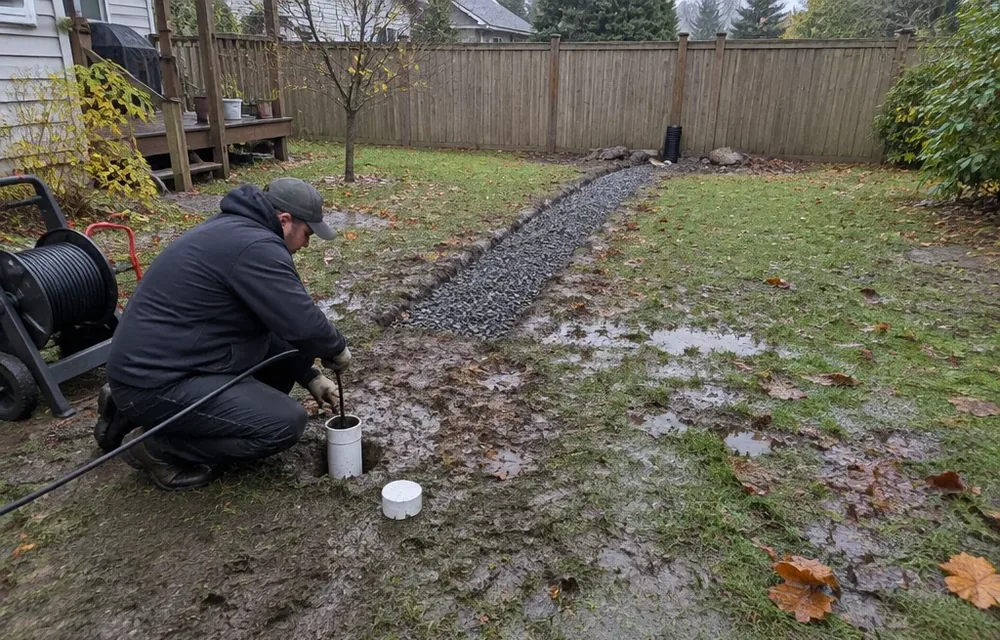
Signs you may need French drain cleaning & repair
Most people arrive here describing a symptom rather than naming a service. These are the three that point this way.
The lawn stays soggy for days after the rain stops
Ground that used to dry out between storms and now stays soft means the water it collects is no longer leaving. A drain that is merely slow shows up this way long before it stops completely.
Water is back against the foundation or in the crawlspace
If a French drain was keeping a crawlspace dry and the damp has returned, the drain has usually filled with silt or debris, or its outlet has been buried or crushed.
Downspouts overflow where they enter the ground
Water bubbling up or spilling over at the downspout connection during heavy rain means the line below is blocked, and it is often roof debris from the gutters that did it.
Why French drains clog in Oregon
A French drain is a perforated pipe in a trench of gravel, usually wrapped in filter fabric, that collects groundwater and carries it somewhere harmless. Everything that stops one working is something the water carries in with it, and Oregon supplies all of it in quantity.
Fine silt and clay. Much of the Willamette Valley sits on heavy clay, and the particles are small enough to migrate through gravel and fabric over years of wet winters. Some settles inside the pipe, where it can be flushed out. Some lodges in the gravel and fabric around it, where it cannot, which is the difference between a drain that needs cleaning and one that needs rebuilding.
Roof debris through the downspouts. A large share of Oregon French drains are tied to the downspouts, whether or not they were designed to be. Every fall the gutters deliver fir needles, maple leaves and the moss that grows on shaded Pacific Northwest roofs straight into the line. Downspout-fed drains clog far faster than drains that only collect groundwater.
Roots. A perforated pipe carrying water through the summer is exactly what a thirsty root is looking for. Willow, poplar, birch and maple are the usual offenders, and roots enter through the perforations rather than joints, which is why a root-bound French drain can be solid for many feet.
Iron ochre. In some wet soils, dissolved iron and the bacteria that feed on it form an orange, slimy deposit that coats the perforations. It looks alarming, it is not a health hazard, and it does come off with jetting, though it tends to come back.
Cleaning versus replacing
The honest answer depends on where the blockage is, and you cannot know that from the surface.
Cleaning works when the pipe is intact and the material is inside it: sediment, roof debris, ochre, or roots that have grown in through the perforations. Hydro jetting through a cleanout or from the outlet end scours the bore and flushes the material out, and a root cutter handles the roots jetting will not move.
Cleaning does not work when the gravel envelope and fabric around the pipe have filled with silt, which is called blinding. Water can no longer reach the pipe, so a perfectly clean pipe still collects nothing. It also does not fix pipe that has been crushed by a vehicle or an excavator, pulled apart at a fitting, or installed without enough fall to drain.
A camera settles it. Running a camera through the line shows whether the pipe is intact, where the blockage sits, and how deep it runs, before anyone spends money on either option.
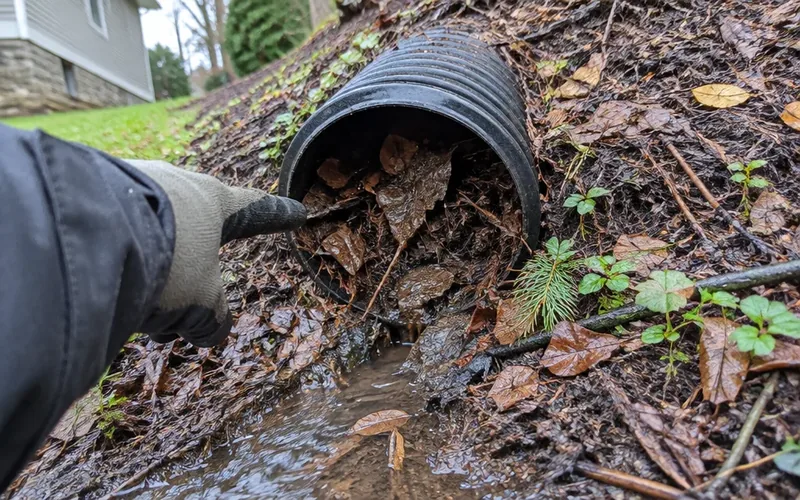
What a French drain service call involves
Find the outlet and any cleanouts
Many older drains were installed without cleanouts, and outlets get buried by landscaping or crushed by mowers. Locating both is the first job, and a surprising number of "failed" drains turn out to have a blocked or buried outlet and nothing else wrong.
Run a flow test
Water goes in at the top of the line and we watch what comes out, and how fast, at the outlet. That separates a slow drain from a blocked one.
Camera the line
The camera shows sediment, roots and ochre, and also crushed or separated pipe and sags where water sits. It is recorded, so you see what we see.
Jet at a pressure the pipe can take
French drains are often thin corrugated or perforated plastic rather than sewer-grade pipe. Pressure and nozzle are matched to the pipe, which is one more reason the camera goes in first.
Test again and show you the result
A second flow test confirms the line carries water end to end. If the camera found damage that jetting cannot fix, you see the footage and the location before any decision about digging.
Where the water goes matters as much as the pipe
A French drain is only as good as its outlet. The water has to leave the property to somewhere lower: daylighting to grade, a drywell sized for the flow, or a storm connection where your city permits one.
It must never be connected to the sanitary sewer. That is prohibited in Oregon jurisdictions for the same reason sump pump connections are: in a storm it floods the treatment system with clean water and contributes to the sewer backups that end up in other people’s basements.
Outlets fail in ordinary ways. They get buried under bark mulch, crushed by lawn equipment, packed with leaves, or colonised by rodents. A simple grate or rodent guard on the outlet, and knowing where it is, prevents a surprising number of service calls.
Keeping a French drain working
Clean the gutters after the leaf drop
Late fall, once the maples and alders are bare, and again in spring. Everything the gutter holds is something that did not go down the drain.
Fit downspout strainers
A basket or leaf filter where the downspout enters the ground line catches needles and moss before they reach the pipe. It is the cheapest protection a downspout-fed drain can have.
Keep the outlet visible
Mark it, keep mulch and soil off it, and check it after big storms. If water is not coming out of it during heavy rain, the problem is upstream.
Plant away from the line
Keep willow, poplar, birch and maple well clear of the trench. Shallow-rooted shrubs and grasses are fine.
Hose-test it in late summer
Run a hose into the top of the line for a few minutes in August or September and confirm water reaches the outlet. Finding a blockage before the rains is a scheduled job; finding it in December is a wet crawlspace.
Frequently asked questions
Can a clogged French drain be cleaned, or does it need replacing?
Often it can be cleaned. If the pipe is intact and the blockage is sediment, roof debris or roots inside it, hydro jetting clears it. If the gravel and fabric around the pipe have filled with silt, or the pipe is crushed or separated, cleaning will not restore it and part of the drain needs rebuilding. A camera inspection tells you which before any money goes into either.
How do I know if my French drain is clogged?
The usual signs are a lawn that stays soggy for days after rain, water pooling against the foundation, a crawlspace that is wet again, and downspouts overflowing at the point they enter the ground. If the outlet stays dry during heavy rain, the water is not getting through the line.
How often should a French drain be cleaned in Oregon?
A drain that only collects groundwater may go many years without attention. One that is fed by downspouts collects roof debris every fall and is worth jetting every few years, sooner under large conifers. Keeping gutters clean and fitting downspout strainers stretches the interval considerably.
Can hydro jetting damage a French drain?
It can if the pressure is wrong for the pipe. French drains are often thin corrugated or perforated plastic, not sewer pipe, so the pressure and nozzle have to be matched to it. That is why the line is camera-inspected first: it shows the pipe type and condition before any water goes in.
My French drain has no cleanout. Can it still be cleaned?
Usually, yes. It can often be cleaned from the outlet end, working upstream. Where the line is long or the outlet is inaccessible, adding a cleanout is a small job that makes every future cleaning faster and cheaper.
Can a French drain be connected to the sewer?
No. Connecting a French drain, sump pump or downspout to the sanitary sewer is prohibited in Oregon jurisdictions. It has to discharge to grade, to a drywell, or to a storm system where the city allows the connection.
What affects the cost of cleaning a French drain?
Mainly the length of the line, whether it has cleanouts or has to be reached from the outlet, what is blocking it, and whether the camera finds damage that needs repair rather than cleaning. Roots and heavy silt take longer to clear than loose debris.
Related services
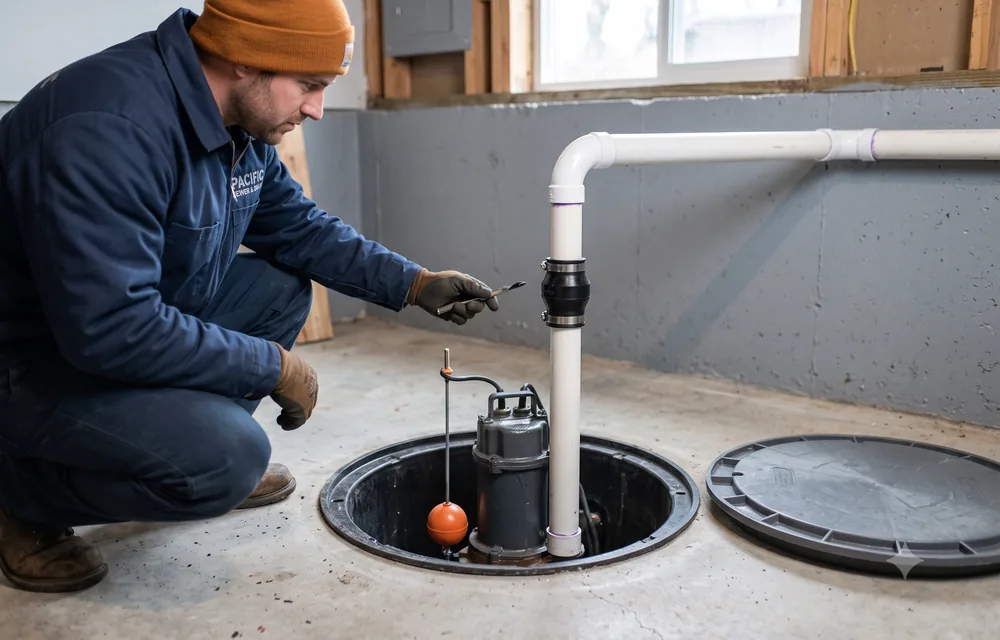
Sump Pump Installation & Repair
A sump pump is the only appliance in your house whose failure you discover at the worst possible moment, in the dark, during a storm, usually after the power has already gone out.

Hydro Jetting
A cable bores a hole through the clog.
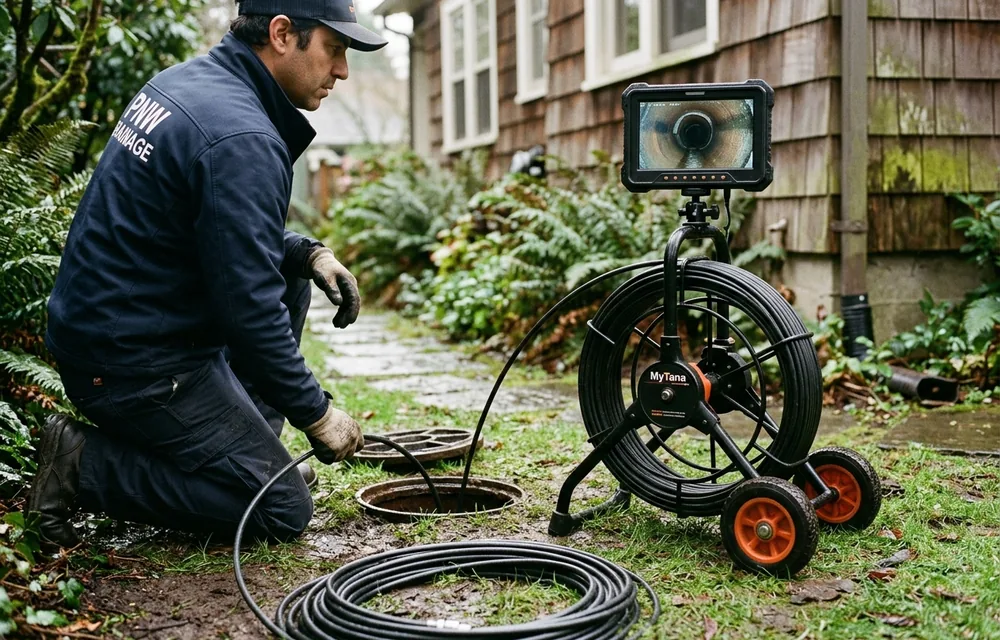
Sewer Scope & Camera Inspection
A sewer scope is the cheapest insurance in real estate and the only defensible basis for an excavation quote.
Drain Cleaning
A single slow sink is a nuisance.
French Drain Cleaning & Repair across Oregon
We provide French drain cleaning & repair in 26 Oregon cities. Local pages cover the housing stock and pipe materials specific to each area.