Low water pressure in the whole house — how to find the cause
Low water pressure is one of the few plumbing problems you can diagnose properly for twelve dollars. A hose-bib gauge from any hardware store, plus a bucket and a stopwatch, will tell you within ten minutes whether you have a pressure problem, a flow problem, or a problem that is not yours at all.
Pressure and flow are different things
Almost every wrong diagnosis starts here, so it is worth thirty seconds. Pressure is force, measured in psi — how hard the water pushes. Flow is volume, measured in gallons per minute — how much arrives. They are related but they fail independently, and the fix for one does nothing for the other.
A pinhole in a garden hose sprays hard: high pressure, low flow. A wide open fire hydrant delivers enormous flow at modest pressure. In a house, a partly closed valve reduces flow while the static pressure behind it stays high. A failed pressure reducing valve reduces pressure while flow capacity is untouched.
The practical version: if your shower is weak but filling a bucket from the tub spout is fast, you have a fixture problem. If everything in the house is weak and the bucket fills slowly too, you have a supply problem. Establish which before you spend anything.
Normal residential pressure is 40 to 60 psi. Oregon plumbing code caps it at 80 psi at fixtures, and above that you are required to have a pressure reducing valve. Below about 40 psi, showers feel poor and appliances start to misbehave.
The ten-minute test
Buy a hose-bib pressure gauge
About $12 at any hardware store. It threads onto an outdoor spigot or a laundry tub connection. This one purchase converts guesswork into a number and is the reason this problem is worth diagnosing yourself.
Measure static pressure
With everything in the house off, thread the gauge onto the hose bib closest to where the water enters the building, open the tap fully, and read it. Under 40 psi is genuinely low. 40 to 60 is normal. Over 80 is a code violation and a different problem — high pressure destroys appliances, fatigues water heaters and blows out supply hoses.
Measure flowing pressure
Leave the gauge on and have someone open two or three fixtures inside. A drop of a few psi is normal. A drop of 20 psi or more means restriction somewhere in the supply — a partly closed valve, a corroded service line, or undersized pipe.
Do the bucket test
Time how long a five-gallon bucket takes to fill from an outdoor spigot, wide open. Divide 300 by the seconds. Under 5 gallons per minute is poor for a house, 8 to 12 is comfortable, and much above that is generous. This measures flow, which the gauge does not.
Check whether it is only hot water
If cold is fine everywhere and hot is weak everywhere, the problem is the water heater or the valve on it, not your supply. A partly closed heater shutoff and sediment blocking the outlet are the two usual answers.
Ask a neighbour
If the houses either side have the same problem at the same time, it is a main or a municipal issue and there is nothing on your property to fix. Call your water utility — most Oregon municipalities will check pressure at the meter at no charge.
The six causes, in order of likelihood
1. A partly closed valve. Unglamorous, extremely common, and free. The main shutoff where the service enters the building, and the valve at the meter, are both frequently left part-open after work is done on the house. A gate valve that looks open can also have a detached gate sitting in the flow path. Check the main first, every time, before considering anything else on this list.
2. A failed pressure reducing valve. If your supply arrives above 80 psi — common on hillside properties and anywhere below a reservoir, which describes a great deal of the Portland West Hills, Lake Oswego and Ashland — you have a PRV where the service enters the house. They have a diaphragm and a spring, they are consumables, and they typically last ten to fifteen years. When one fails it usually fails closed, and whole-house pressure collapses overnight. This is the most common cause of a sudden, total, everything-at-once pressure loss. Replacement runs $350 to $700.
3. Galvanised supply piping. Galvanised steel was standard in Oregon houses built before roughly 1960 and it fails from the inside. Zinc coating erodes, the exposed steel corrodes, and the corrosion product — tubercles — grows inward and progressively narrows the bore. A three-quarter-inch galvanised line can be down to the effective diameter of a pencil while looking perfectly sound from outside. The tells are pressure that has declined gradually over years rather than suddenly, brief rusty water after the house has been unused, and pressure that collapses when a second fixture is opened. The only fix is repiping.
4. A leaking or failing water service line. The line from the meter to the house. A leak underground reduces what arrives without any visible sign indoors. Look for an unexplained increase in the water bill, a patch of lawn that stays green or soggy through an Oregon dry August, water pooling at the kerb, or the sound of running water at the meter with every fixture off. The definitive test: shut off the main valve at the house and watch the meter's low-flow indicator. Any movement means a leak between the meter and the shutoff.
5. A clogged or failing water heater — hot side only. Sediment can obstruct the tank outlet, and the shutoff valve on the cold inlet is a favourite for being left half closed. If cold is normal everywhere and hot is weak everywhere, this is where to look, and our water heater guide covers the rest of what that tank is telling you.
6. Municipal supply, elevation and peak demand. Some pressure problems are simply geography. Properties at the top of a pressure zone — high in the West Hills, the upper parts of Ashland, hillside lots around Bend — get whatever the zone can deliver, and that is lowest at peak demand on summer evenings. Well systems have their own version: an undersized pressure tank, a waterlogged bladder, or a pressure switch set low. If the utility confirms good pressure at your meter and your service line is sound, a booster pump is the honest answer.
When it is only one fixture
If the rest of the house is fine, stop looking at the supply. Single-fixture problems are almost always a five-dollar part.
A clogged aerator. The screen at the tip of a faucet catches grit and mineral scale. Unscrew it, soak it in white vinegar for an hour, brush it, refit. This is the answer for a slow kitchen or bathroom faucet the overwhelming majority of the time, and it is free.
A scaled shower head. Same mechanism, larger surface. Unscrew it, soak overnight in vinegar, poke the nozzles clear. In Bend, Redmond, Prineville and Klamath Falls, and on hard well water anywhere in Oregon, expect to do this a few times a year.
A partly closed angle stop. The small chrome valve under a sink or behind a toilet. Turn it fully counter-clockwise. It is astonishing how often this is the whole story after any work has been done in the room.
A cartridge or mixing valve. In a single-handle shower, a worn pressure-balancing cartridge restricts flow and often affects hot more than cold. It is a modest part and a straightforward replacement.
A kinked or crimped supply line. Especially braided stainless connectors under a sink that were bent tight during installation.
If a fixture has always been weak since the day it was installed, look for a flow restrictor in the aerator or shower head rather than a fault. Modern fixtures ship with them, and some are removable and some are not — check before assuming the fixture is defective.
Repiping: what it costs and when it is unavoidable
If the diagnosis lands on galvanised piping, there is no partial fix worth paying for. Cleaning corroded galvanised does not work, and replacing one branch simply moves the restriction to the next one. Old galvanised also sheds the corrosion it accumulates, which is why the water runs briefly rusty.
A whole-house repipe in Oregon typically runs $4,500 to $15,000 depending on square footage, number of bathrooms, the number of storeys, whether there is a crawlspace or a slab, and how much wall finish has to be opened and restored. PEX is now the usual material — it is faster to install, needs fewer openings because it can be routed in continuous runs, tolerates freezing far better than copper, and is significantly cheaper. Copper remains the choice where it is specified or preferred, at a higher cost.
The good news is that a repipe is scheduled work. Unlike a burst line it happens on your calendar, and it can be phased — supply lines first, branches later — if that suits the budget.
A water service line replacement is the smaller cousin: just the run from the meter to the house, typically $2,500 to $7,500 depending on length, depth, and what has to be crossed. If the diagnosis is a leaking or corroded service line rather than interior piping, that is the whole job.
The problem people miss: pressure that is too high
Half of all pressure complaints turn out to be the opposite problem. Oregon code caps pressure at fixtures at 80 psi, and above that the damage is continuous and invisible.
High pressure blows out washing machine and dishwasher supply hoses, which is a leading cause of residential water damage claims. It fatigues the water heater and lifts the temperature-and-pressure relief valve repeatedly. It causes water hammer, which loosens joints over time. It wears every faucet cartridge and toilet fill valve in the house faster. And it wastes a measurable amount of water on every use.
If your gauge reads over 80 psi, fit or replace the pressure reducing valve. $350 to $700, and it pays for itself in avoided appliance and fixture failures.
Also worth checking at the same time: if your supply has a backflow preventer or a check valve at the meter — increasingly standard across Oregon municipalities — your plumbing is a closed system. Heated water expands and has nowhere to go, so pressure spikes on every water heater cycle even if your static pressure is fine. An expansion tank solves it for a few hundred dollars and prevents a failure mode most homeowners never hear about until the T&P valve starts weeping.
What to check before you call, and what it costs when you do
| Fix | Typical Oregon cost | DIY? |
|---|---|---|
| Open a partly closed main or angle stop | Free | Yes |
| Clean an aerator or shower head | Free | Yes |
| Replace a shower cartridge | $150–$300 | Sometimes |
| Replace a pressure reducing valve | $350–$700 | No |
| Fit a thermal expansion tank | $250–$500 | No |
| Locate an underground service line leak | $250–$500 | No |
| Replace a water service line | $2,500–$7,500 | No |
| Whole-house repipe from galvanised | $4,500–$15,000 | No |
| Well pressure tank or switch | $400–$1,600 | No |
Three things you can do in ten minutes that make the visit shorter and cheaper: take the gauge readings — static and flowing — and write them down; confirm whether it is hot only, cold only, or both; and check whether neighbours have the same problem. Those three facts eliminate most of the diagnostic tree before anyone arrives.
And one worth knowing: if the meter's low-flow indicator moves with every fixture in the house shut off, you have an active leak on your side of the meter. That is worth calling about today rather than at the weekend, because you are paying for every gallon of it.
Frequently asked questions
Why did my water pressure drop suddenly overnight?
A sudden, whole-house, everything-at-once drop points at one of three things: a partly closed valve after recent work, a failed pressure reducing valve, or a municipal supply issue. PRVs typically fail closed and they last ten to fifteen years, so if yours is around that age and nothing else changed, that is the leading candidate. Check with a neighbour first — if their pressure dropped too, it is the utility and there is nothing on your property to fix.
Why is my hot water pressure low but cold is fine?
The restriction is on the hot side only, which means the water heater or its valves. The usual suspects are a partly closed cold-inlet shutoff on the tank, sediment obstructing the tank outlet, or scale in the hot supply lines of an older galvanised system where the hot side always corrodes faster. Start by confirming the tank shutoff is fully open, then flush the tank.
Can tree roots cause low water pressure?
Rarely, and not the way they cause sewer problems. Roots invade sewer lines because those lines carry nutrients and are not pressurised. A water service line under pressure tends to leak outward rather than admit roots — though a root can wrap and crush an older polybutylene or galvanised service line, and a leak from any cause reduces what arrives at the house. If your pressure loss came with a jump in the water bill and a green patch on the lawn, the service line is where to look.
Is 40 psi too low for a house?
It is at the bottom of acceptable. 40 to 60 psi is the normal working range; most people find showers noticeably better toward 55 to 60. Below 40, tankless water heaters may not fire reliably, irrigation systems underperform, and running two fixtures at once becomes obvious. It is not damaging — unlike high pressure — so it is a comfort and function decision rather than an urgent one.
Will a booster pump fix low water pressure?
It will, if the cause is genuinely inadequate supply pressure — a property at the top of a pressure zone, or a long uphill service run. It will not fix a restriction, and this matters: installing a booster ahead of corroded galvanised pipe or a partly closed valve pushes harder against the blockage and can turn a weak spot into a leak. Diagnose first. A booster is the right answer only after the utility has confirmed good pressure at the meter and your own piping has been cleared of fault.
Services mentioned in this guide
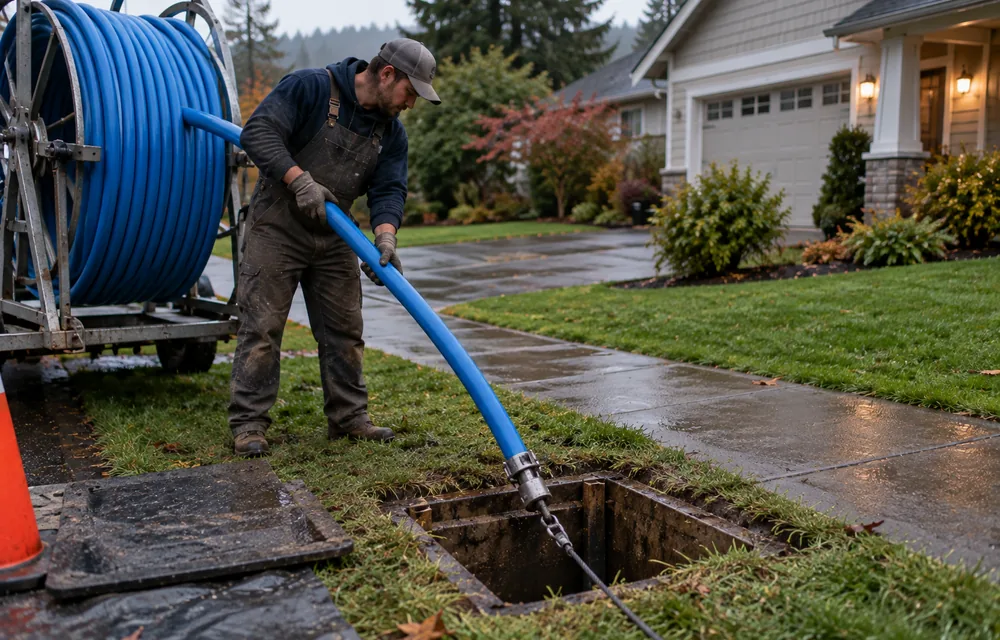
Water Service Line Replacement
The water service line is the pipe carrying potable water from the meter to your house.
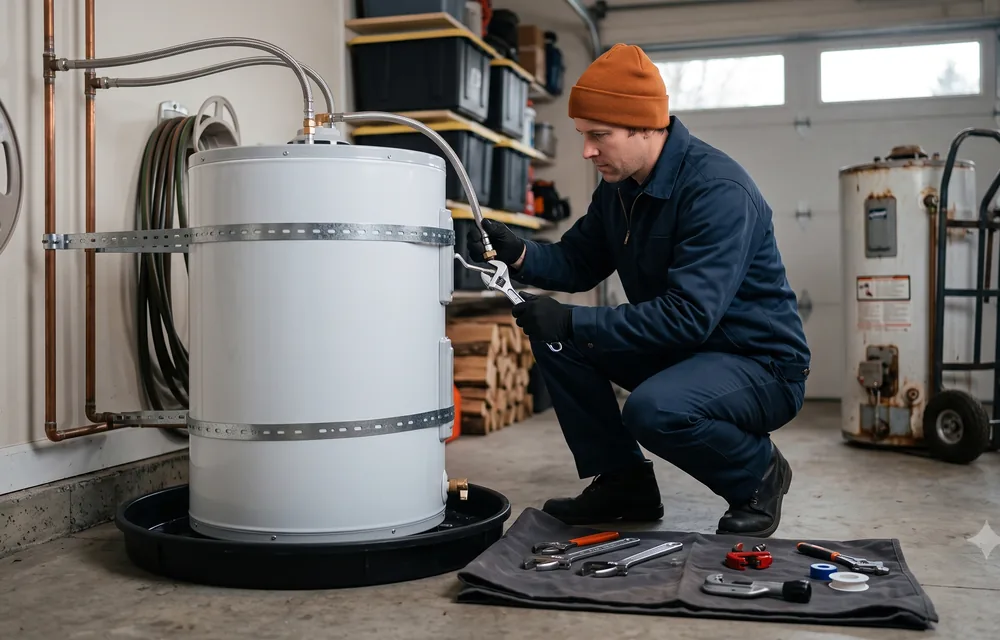
Water Heater Repair & Replacement
Most water heater calls split cleanly into two groups: a $200 part on a tank worth keeping, and a tank that has already failed and is quietly ruining the floor.
Drain Cleaning
A single slow sink is a nuisance.
More guides
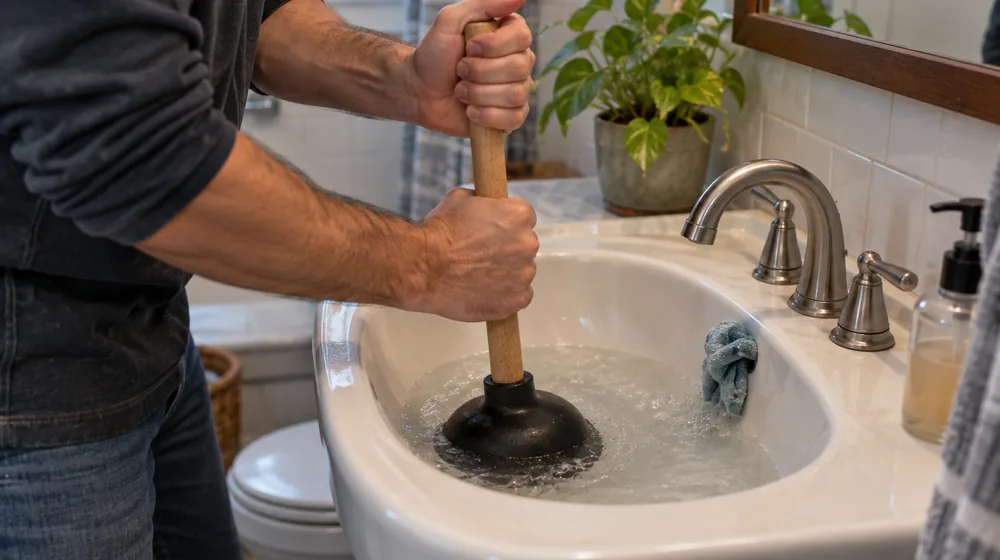
How to Unclog a Drain Yourself (and When to Stop)
Most single-fixture clogs are genuinely a DIY job. Here is what works, in the order a plumber would try it — and the p…
Sewer Backup: What to Do in the First Ten Minutes
A main line backup gets measurably worse with every gallon of water the household uses. What you do in the first ten m…
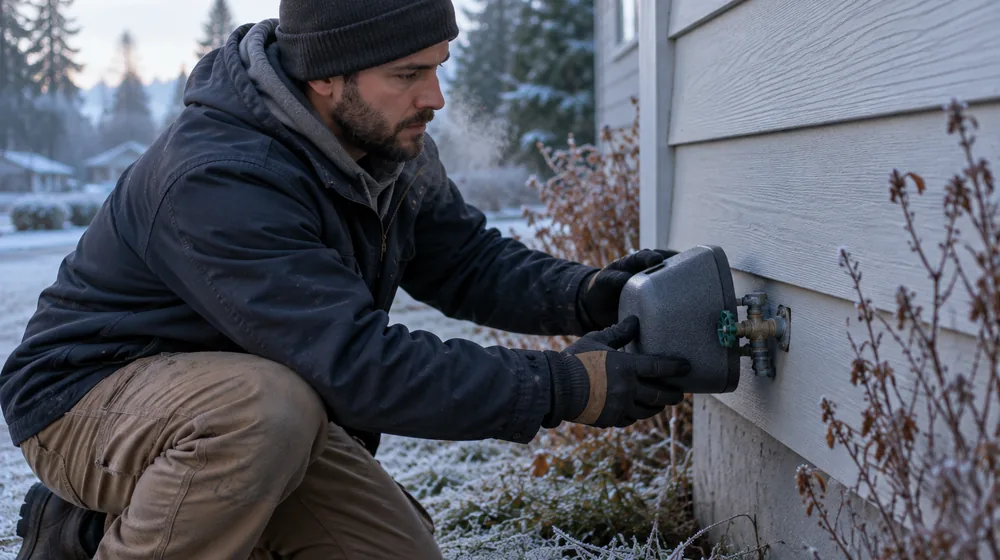
Winterizing Plumbing in Oregon: A Regional Checklist
Generic winterizing advice is written for the Midwest and it is either overkill or dangerously inadequate depending on…