Sewer Backup: What to Do in the First Ten Minutes
A main line backup gets measurably worse with every gallon of water the household uses. What you do in the first ten minutes largely determines what this costs you.
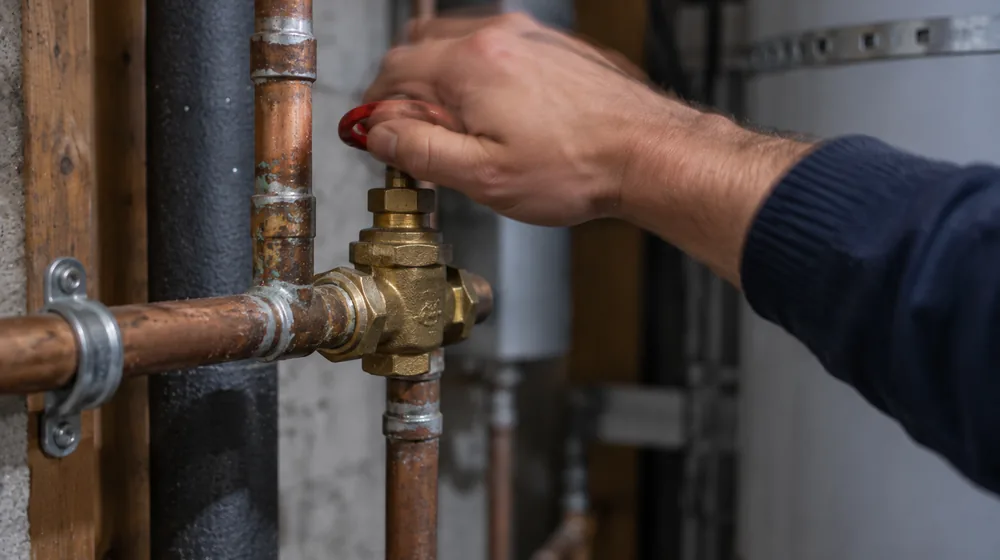
Do these things now
Stop all water use
Every tap, and the two people forget: the dishwasher and the washing machine. With the line blocked, water you add has to surface somewhere, and it chooses the lowest drain in the building. A washing machine mid-cycle can dump twenty gallons onto a basement floor while you are upstairs looking at a toilet.
Do not flush again
The most common way a manageable backup becomes a flooded floor is one more hopeful flush.
Keep people and pets out of the water
Sewage carries bacteria, and in older Oregon homes standing water may contact asbestos-containing floor materials. Treat it as contaminated, not merely dirty. Anyone who does walk through it should not then walk onto carpet.
Cut power to the affected area if water is near outlets
Only if you can reach the panel without standing in the water. If you cannot, leave it and say so when you call.
Photograph everything before you clean up
If you file a claim, the photos taken before anything was moved are the ones the adjuster relies on. Video walking through the space is even better. Capture the water line on the wall, affected contents, and the fixtures involved.
Find your cleanout, but do not open it
A capped 3 or 4 inch pipe near the foundation or in the front yard. Knowing where it is saves the technician time on arrival. Opening it yourself can release pressurised sewage.
Check whether it is even your problem
Before you pay for anything: if your neighbours are backing up at the same time, the blockage may be in the public main, which is the utility's responsibility to clear at no cost to you.
Call your city's wastewater emergency line first and ask. It costs you one phone call and it occasionally saves the entire bill. Any contractor who discourages you from making that call is not acting in your interest.
The signals that point at a public main rather than your lateral: multiple properties affected simultaneously, sewage surfacing at a street manhole or in the gutter, or a backup that begins during heavy rain across a whole block rather than at one house. The signals that point at your lateral: only your property affected, a history of slow drains at that address, and mature trees between the house and the street.
How bad is it, really — a quick severity read
| What you are seeing | Severity | What it means |
|---|---|---|
| One toilet overflowing, other fixtures fine | Low | Toilet trapway blockage. A flange plunger usually resolves it. |
| Gurgling in other fixtures, nothing backing up yet | Moderate | Main line narrowing. Book now at standard rates rather than later at emergency rates. |
| Lowest shower or floor drain filling when you flush | High | Active main line blockage. Stop water use immediately. |
| Sewage on a finished floor | Urgent | Call now. Damage is accumulating and remediation cost climbs by the hour. |
| Sewage plus a sewage smell outside or soggy lawn | Urgent + structural | Wastewater is escaping underground. Expect a repair, not just a clearing. |
| Multiple neighbours affected | Call the city first | Likely a public main. Not your bill. |
Insurance, which usually surprises people
Standard Oregon homeowner policies generally exclude sewer backup. Coverage normally requires a specific water backup endorsement, which most carriers sell inexpensively and which many homeowners have without realising.
Check your declarations page for "water backup" or "sewer backup" coverage. Separately, look for a service line endorsement, which covers the buried lateral itself — that is the one that matters if the backup turns out to be a collapsed pipe rather than a clog.
Keep every invoice, including the emergency call. Do not dispose of damaged property until the adjuster has seen it or explicitly released you to. If you have to remove saturated carpet or drywall for health reasons before the adjuster arrives, photograph it thoroughly first and keep a sample.
One practical note that catches people out: policies commonly distinguish between the cost of clearing the blockage and the cost of the resulting water damage. The second is often covered while the first is not. That is not a reason to skip the claim — the damage is usually the larger number.
Cleanup, and what you should not do yourself
Small volumes of clean-ish water on a hard floor are a reasonable DIY job with gloves, a mop and a disinfectant. Beyond that, the calculus changes.
Call a remediation specialist if sewage has contacted carpet, underlay, drywall or insulation, or if the affected area is larger than roughly ten square feet. Porous materials that have absorbed contaminated water cannot be surface-cleaned back to safe — they need removal, and the boundary of what must go is further out than it looks.
Do not run a household fan or HVAC system to dry a sewage-affected space. You are aerosolising contaminated material and distributing it through the ducting into the rest of the house.
Do not mix cleaning products. Bleach and ammonia-based cleaners produce chloramine gas, and people reach for both when panicking.
Ventilate to outside with windows and a fan pointed out rather than in, and wear gloves and eye protection. Wash clothing separately and hot.
Crawlspaces deserve particular care in Oregon, because so much of our housing sits over one. Sewage in a crawlspace saturates soil and insulation, and left alone it produces wood rot, mould and an indoor air problem that presents months later as a musty smell nobody can locate.
Why Oregon backups cluster in winter
Emergency call volume is not evenly spread through the year. It spikes from November through February, and the mechanism is groundwater infiltration rather than usage.
A lateral with root-opened joints or cracked segments sits in saturated winter soil, and groundwater enters through the same defects that were merely a slow-drainage nuisance in August. A line that coped all summer at partial capacity has no headroom once it is also carrying groundwater.
The practical implication is uncomfortable but useful: the marginal line that gave you one slow week last summer is the one that fails at 11pm in a December atmospheric river, at emergency rates. A camera inspection in early autumn genuinely is cheaper than the storm-season call.
The effect is strongest in the low-lying parts of the Willamette Valley and on the coast, where winter water tables can reach or exceed lateral depth. In Salem, Springfield, Keizer and the river-adjacent parts of Albany and Corvallis, backup calls track river stage and sustained rainfall far more closely than they track anything happening inside the house.
After it is cleared: the question worth asking
Once flow is restored, there is a fork in the road that determines whether you deal with this again next year.
If the line cleared easily and cleanly, and this is the first time, you probably had an ordinary blockage and no further action is needed. Note the date, and if it recurs you now have a pattern.
If any of the following is true, ask for a camera inspection before the technician leaves — it is far cheaper as part of the same visit than as a separate call:
- The cable stopped hard at the same footage repeatedly. That is an offset joint, a belly or a partial collapse, not a clog.
- White fibrous material came back on the cutter head. That is root, and it will return.
- This is the second or third clearing of the same line in two years.
- The building was constructed between 1945 and 1972 and the lateral has never been inspected. That is the Orangeburg window.
The inspection should produce a recorded video file you keep, footage marks on every defect, and a surface locate with depth. Those three things are what let you get a competing repair quote instead of accepting the first number you are given. See sewer line repair for what the repair options actually cost.
What an emergency call actually costs
Knowing the number in advance is worth something at 11pm, so here it is plainly.
Clearing an active main line backup in Oregon typically runs $249 to $750. Nights, weekends and holidays carry a dispatch premium on top of standard rates. What matters more than the figure is when you learn it: you should be told the dispatch fee and the expected range on the phone, before a truck is dispatched, and told again before work resumes if what the technician finds differs materially from what you described. A price that first appears on the invoice is a red flag regardless of how reasonable it is.
If the clearing reveals a structural failure, resist being sold the permanent repair at midnight. Get flow restored, get the line on camera, and look at the replacement in daylight when you can think and compare. A contractor pushing you to sign a five-figure contract while you are standing in a flooded hallway is not managing your emergency, they are using it.
Our free cost estimator gives you a tailored range in about a minute, including the after-hours factor, so you can sanity-check whatever you are quoted.
Services mentioned in this guide
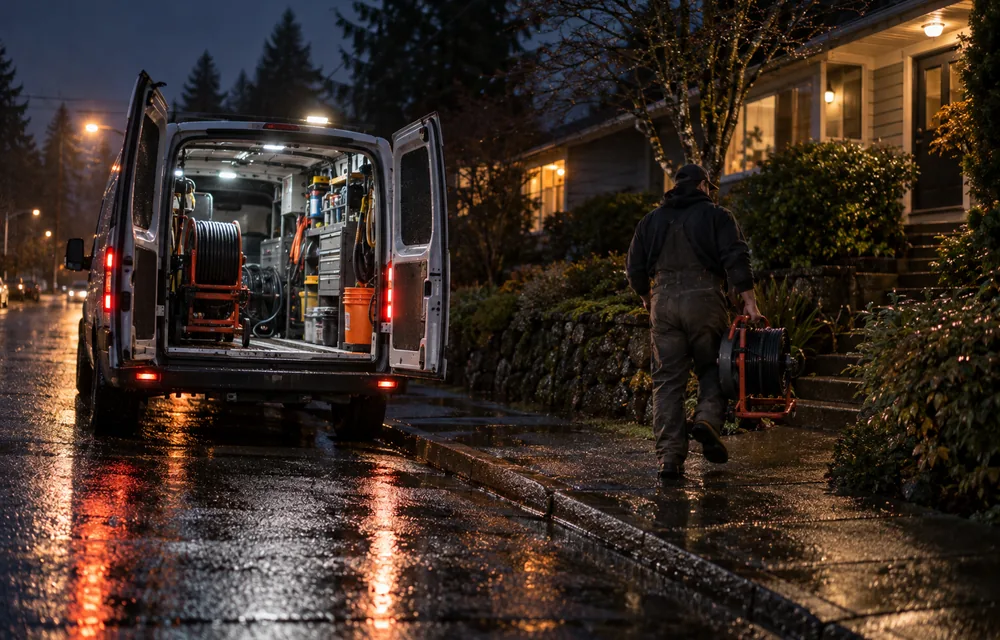
24/7 Emergency Drain & Sewer Service
If sewage is entering your home right now, stop reading and call.
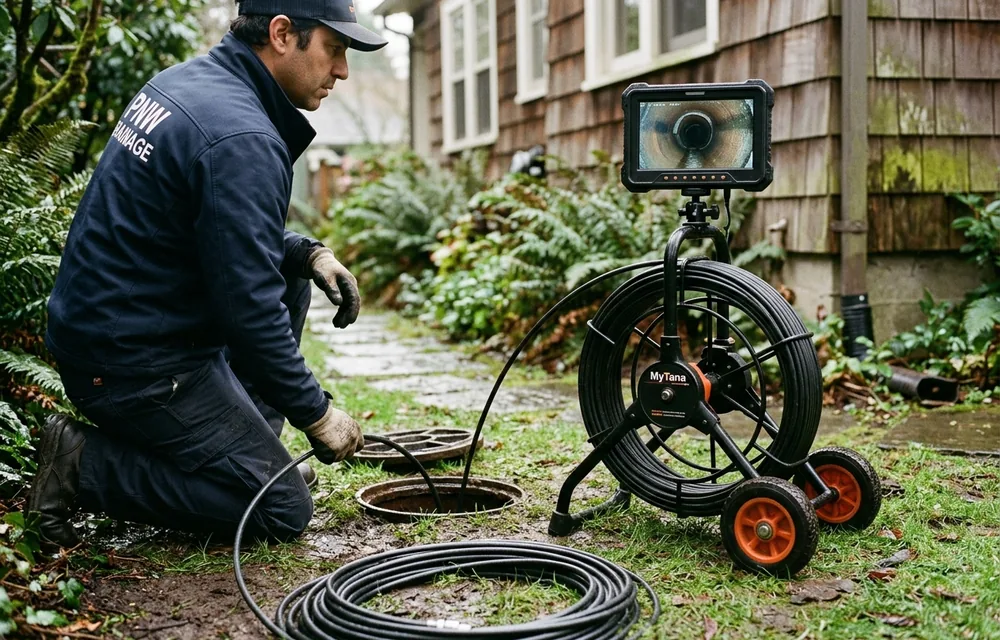
Sewer Camera Inspection
A sewer scope is the cheapest insurance in real estate and the only defensible basis for an excavation quote.
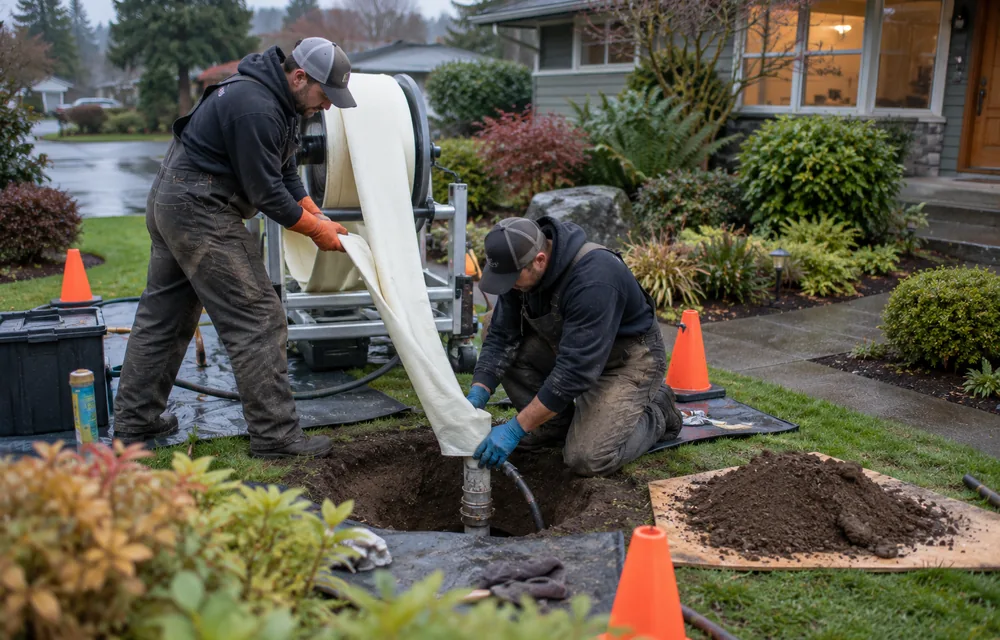
Sewer Line Repair & Replacement
Sewer replacement is the largest unexpected bill most Oregon homeowners ever face on their plumbing.
More guides
How to Unclog a Drain Yourself (and When to Stop)
Most single-fixture clogs are genuinely a DIY job. Here is what works, in the order a plumber would try it — and the p…
Winterizing Plumbing in Oregon: A Regional Checklist
Generic winterizing advice is written for the Midwest and it is either overkill or dangerously inadequate depending on…
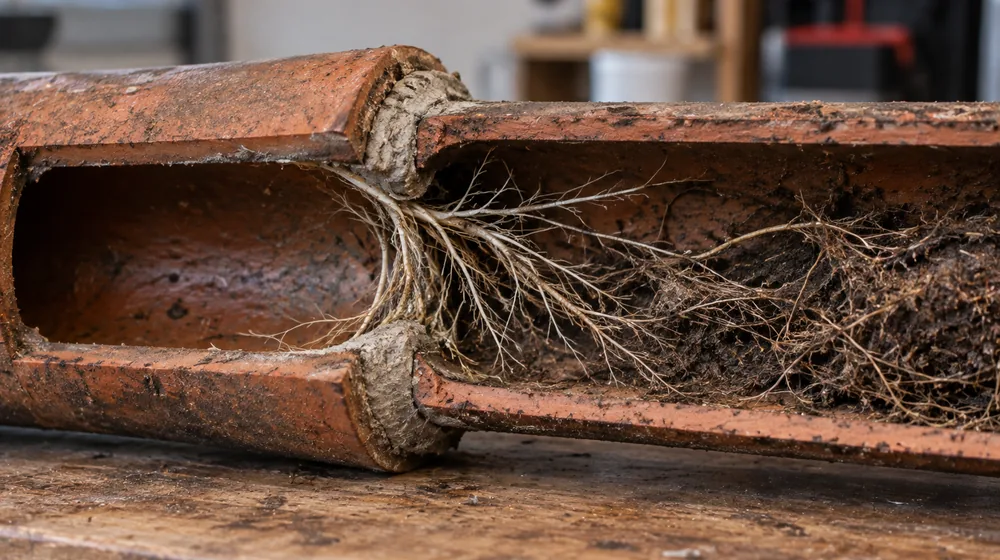
Tree Roots in Your Sewer Line: Why Oregon Has It Worst
Roots do not break into a healthy pipe. They find the joint that is already leaking. Understanding that single fact te…