How to Unclog a Drain Yourself — and When to Stop Trying
Most single-fixture clogs are genuinely a DIY job. Here is what works, in the order a plumber would try it — and the point at which continuing costs you more than calling.
First, confirm it is actually a fixture clog
Everything below applies only if one drain is affected and everything else in the house runs normally. If several fixtures are slow, or flushing a toilet makes a shower gurgle, stop — that is a main line problem and nothing you do at the fixture will reach it. Our clog symptom diagnostic sorts this in about a minute.
The distinction is worth internalising because it is the single thing that separates a twenty-minute job from a three-hour one. A fixture clog sits in the trap or the branch arm within a few feet of the drain opening. A main line clog sits downstream of where all the branch lines join, which is typically well outside the building envelope, and no tool you own reaches it.
Why your drain clogged, by fixture
Knowing what is in there changes which method works. The four common fixtures fail in four different ways.
Bathroom sink. Hair bound with soap scum and toothpaste solids, almost always within six inches of the opening and usually caught on the pop-up stopper mechanism itself. This is the easiest clog in the house and the one most often solved without any tool at all.
Shower and tub. The same hair-and-soap mass, but further down and harder to reach because the stopper assembly is more awkward. Tub drains also collect the small plastic debris that comes off bath toys and razor caps.
Kitchen sink. Grease, almost every time. It goes down warm and liquid, meets a cold pipe, and congeals onto the wall as a coating rather than a plug. Food particles from a disposal then bind into that coating. This is why kitchen clogs recur and bathroom clogs usually do not.
Toilet. Either too much paper, something that should not have been flushed, or — the underrated one — a low-flow toilet that simply does not move enough water to clear the trapway reliably. So-called flushable wipes do not disperse and are the leading cause of toilet and branch-line blockages in newer housing.
What works, in order
Clear the visible collection point
Pull the pop-up stopper on a bathroom sink, or the strainer on a shower. In a bathroom, the overwhelming majority of clogs are a hair-and-soap mass within six inches of the opening. This step alone solves more clogs than everything else combined, and it requires no tools.
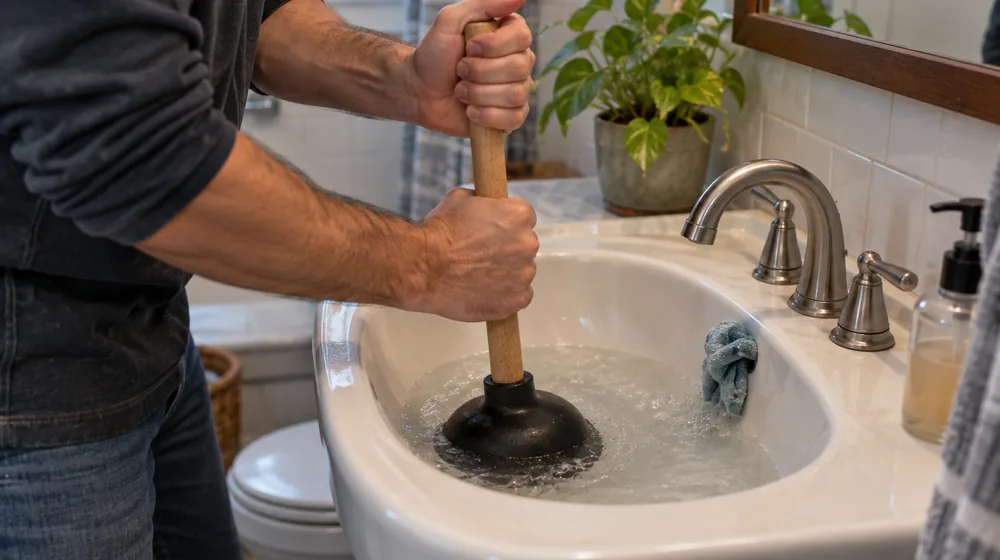
Plunge it properly
Almost everyone does this wrong. You must block the overflow opening — that small hole near the rim — with a wet cloth, or the plunger just moves air through it and generates no pressure at the clog. Use a cup plunger on sinks and tubs, a flange plunger on toilets, and keep enough water in the basin to cover the plunger cup. Steady rhythmic strokes beat violent ones.
Try very hot water and dish soap on a kitchen sink
For a grease clog specifically, a kettle of hot (not boiling — boiling can damage PVC joints) water with a generous squirt of degreasing dish soap, poured slowly in stages with a minute between each, will sometimes soften the deposit enough to move it. This does not work on hair and it does not work on a full blockage.
Use a hand auger
A $20 drum auger from any hardware store reaches most fixture clogs. Feed it slowly, and when you meet resistance, crank rather than shove. If it feels like you are pushing through soft material, you are packing the clog tighter rather than breaking it up. Withdraw, clean the head, and try again at a slightly different angle.
Clean the P-trap
Bucket underneath, unscrew the two slip nuts, remove the trap and clean it out. On a bathroom sink this is fifteen minutes and it removes the clog rather than pushing it downstream. It is also where you find the earring. Check the slip-nut washers when you reassemble — a fifty-cent washer prevents the slow leak that turns this into a cabinet repair.
The tools worth owning, and the ones to skip
| Tool | Cost | Verdict |
|---|---|---|
| Cup plunger | $8 | Buy it. Correct tool for sinks and tubs. |
| Flange plunger | $12 | Buy it. The fold-out flange seals a toilet properly; a cup plunger does not. |
| Hand drum auger, 25ft | $20–35 | Buy it. Reaches most fixture clogs and pays for itself on the first use. |
| Plastic barbed hair tool | $3 | Buy a few. Astonishingly effective in bathroom drains. |
| Drain bladder (hose attachment) | $10 | Skip. Cross-connection risk with your potable supply. |
| Caustic drain chemicals | $8 | Skip. See below — actively counterproductive. |
| Enzyme drain maintainer | $15 | Optional. Useless on an existing clog, mildly helpful as monthly prevention on a kitchen line. |
| Powered auger / rental drum machine | $60/day | Skip. Easy to damage pipe or injure yourself without training. |
What does not work, and what causes damage
Caustic drain cleaners. They are the single most common way a homeowner makes a plumbing problem worse. On a fully blocked line the chemical sits in the standing water and never reaches the obstruction. It generates heat that can deform PVC and accelerates corrosion in old cast iron. And when a plumber finally opens the line, that caustic solution is what comes out — which is a genuine safety issue for whoever is under the sink. If you have used some, say so when you call. It is information, not a confession.
Boiling water into a PVC trap. Hot is fine; boiling can soften the joints and, on an older solvent-welded fitting, start a slow leak you will not notice for months.
A garden hose forced into the drain. Creates a cross-connection risk between your drain line and your potable water supply, which is exactly what backflow codes exist to prevent. The same objection applies to drain bladders.
Repeated plunging on a main line clog. It can force contaminated water up through other fixtures without moving the actual blockage, which is well downstream.
Running the disposal harder. A garbage disposal grinds solids. It does nothing whatsoever to grease, and the finer particles it produces bind more readily into an existing grease layer. If the sink is already backed up, running it adds material to the blockage.
Four signs to stop and call
- More than one fixture is affected. That is a main line clog, not a fixture clog, and it is past the reach of anything you own.
- It came back within a few weeks. The branch line is coated rather than blocked, and cabling bores a channel through a coating without removing it. That usually means hydro jetting.
- You can hear gurgling in a different fixture. Air is being displaced past a partial blockage downstream — an early warning that the main is narrowing. Dealing with it now is a scheduled appointment; waiting usually means an emergency call.
- There is any sewage smell or backup. Stop using water entirely and call. See what to do in a sewer backup.
What it costs when you do call
Knowing the number in advance removes most of the anxiety about picking up the phone.
A single accessible fixture drain in Oregon typically runs $149 to $289. A main line clog runs $249 to $450, moving toward the top of that range if there is no accessible cleanout and a toilet has to be pulled and reset, or if heavy root cutting is involved. Nights, weekends and holidays carry a dispatch premium, which should be disclosed to you on the phone before anyone is dispatched rather than appearing on the invoice afterward.
Two things genuinely lower your bill and cost you nothing. Find your exterior cleanout before the technician arrives — a capped three or four inch pipe near the foundation or in the front yard toward the street. Working from a proper cleanout is faster and cheaper than any alternative. And know roughly when the building was built, because it is the single most useful fact for predicting what is in the ground.
Our free cost estimator gives you a tailored range in about a minute, including the regional factor — the same job genuinely costs differently in Bend than in Salem.
Preventing the next one
Prevention for drains is unglamorous and it works.
Kitchen: pour cooled fat into a jar rather than the sink. Bacon grease, roasting fat, fryer oil. Wipe greasy pans with a paper towel before washing. This one habit prevents the majority of residential kitchen line failures, and no product substitutes for it.
Bathroom: a $3 barbed hair tool run down the drain once a month takes thirty seconds and prevents nearly every bathroom sink and shower clog. Fit a mesh strainer over shower drains if anyone in the house has long hair.
Toilets: nothing but human waste and toilet paper. Wipes labelled flushable are not, and cotton products, dental floss and paper towel are all worse.
Whole house: if you are on an older Oregon lateral with mature trees nearby, the highest-value preventive action is not a product at all — it is a camera inspection in early autumn, before the wet season arrives. A marginal line that gave you one slow week in August is the one that backs up in a December atmospheric river at emergency rates.
Frequently asked questions
Does Dawn really unclog drains?
For a grease clog in a kitchen sink that is still draining slowly, sometimes — and it is worth the two minutes it takes. Dish soap is a surfactant, so it does genuinely help emulsify fat, and poured in with a kettle of hot (not boiling) water it can soften a soft deposit enough to move it. It does nothing at all to hair, to a solid obstruction, or to a line that is fully blocked, because the standing water stops it ever reaching the clog. And it does not remove the grease coating on the pipe wall that caused the problem — which is why the trick works once and then works less well each time.
How do I unclog the main sewer line myself?
Honestly: you mostly cannot, and the attempt is where people cause damage. A main line clog sits downstream of every branch in the house, usually outside the building, often 20 to 80 feet along and several feet down. Reaching it takes a drum machine with the right cable and cutter head, and driving the wrong head into clay or cast iron cracks it. What you can safely do is stop all water use so nothing backs up further, find your exterior cleanout so whoever comes can work from it, and open it slowly and from the side — if the line is blocked, that cap is holding back a column of sewage. Renting a machine is a false economy on a main: the machine is cheap and the pipe is not.
What is the fastest way to unclog a drain?
Pull the stopper and clear the visible collection point, then plunge properly with the overflow blocked. That sequence solves more household clogs than everything else combined and takes about five minutes. Skipping straight to a chemical is slower in practice, because it usually does not work and then you have a caustic solution sitting in the standing water making the real fix more awkward and more dangerous.
Can baking soda and vinegar unclog a drain?
It fizzes impressively and it is close to useless on an actual blockage. The reaction happens in the first few inches of the drain, produces almost no mechanical force, and neutralises itself in seconds. It is fine as a deodoriser for a smelly but flowing drain. It will not shift hair, and it will not shift congealed grease.
When should I stop trying and call someone?
Four signals: more than one fixture is affected, the same drain has clogged again within a few weeks, you can hear gurgling in a different fixture, or there is any sewage smell or backup. Each of those means the problem is downstream of anything you can reach, and continuing usually costs more than calling did.
Services mentioned in this guide
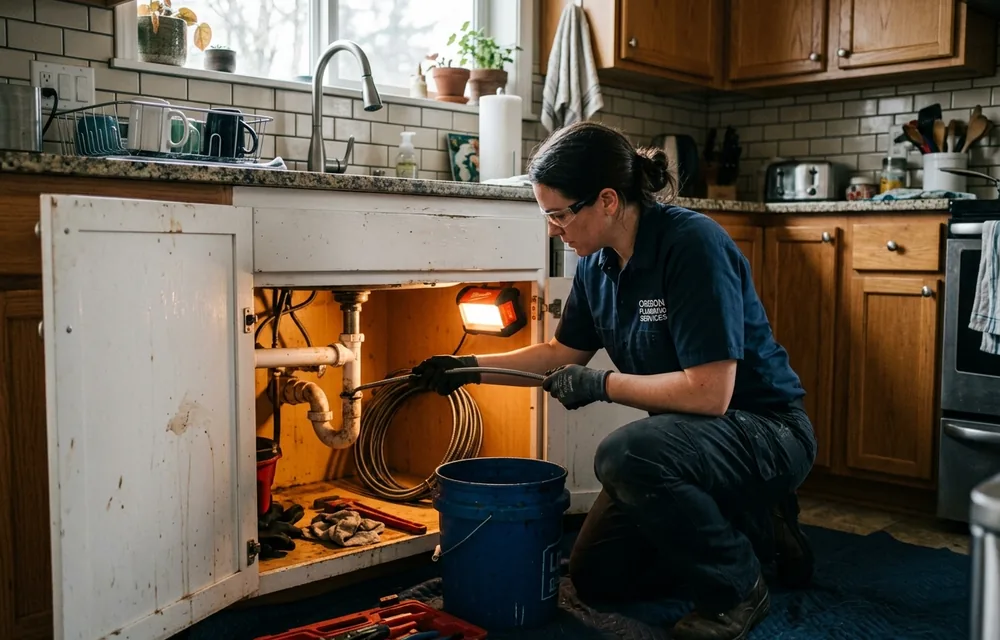
Drain Cleaning
A single slow sink is a nuisance.
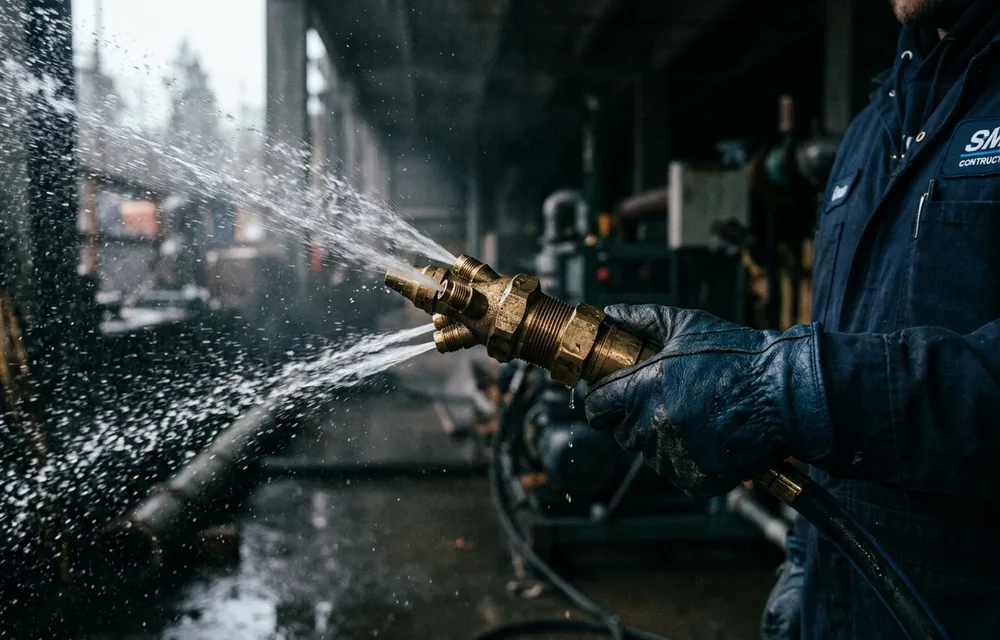
Hydro Jetting
A cable bores a hole through the clog.
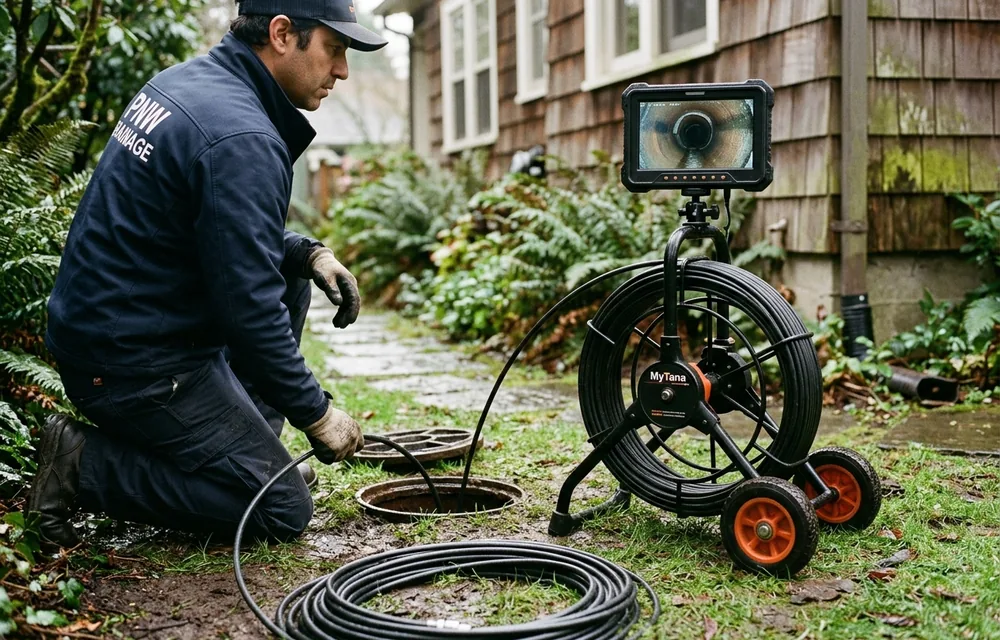
Sewer Camera Inspection
A sewer scope is the cheapest insurance in real estate and the only defensible basis for an excavation quote.
More guides
Sewer Backup: What to Do in the First Ten Minutes
A main line backup gets measurably worse with every gallon of water the household uses. What you do in the first ten m…
Winterizing Plumbing in Oregon: A Regional Checklist
Generic winterizing advice is written for the Midwest and it is either overkill or dangerously inadequate depending on…
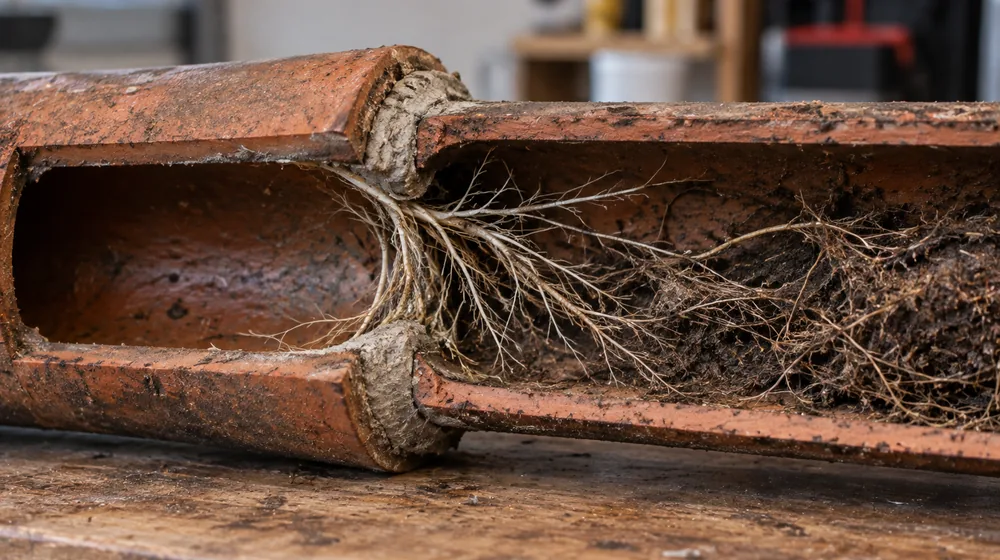
Tree Roots in Your Sewer Line: Why Oregon Has It Worst
Roots do not break into a healthy pipe. They find the joint that is already leaking. Understanding that single fact te…