The best drain cleaner in 2026: what actually clears a clog, and what to leave on the shelf
The best drain cleaner is usually not a bottle. For the clogs most homes actually get, hair in a bathroom drain and grease in a kitchen line, a plunger, a drain snake or a cheap barbed plastic strip clears more, faster, with no chemical risk. Chemical cleaners have a narrow use: a drain that is slow, not stopped. Enzyme cleaners are maintenance, not a rescue. And nothing sold in a bottle fixes tree roots, a broken pipe or a main-line blockage.
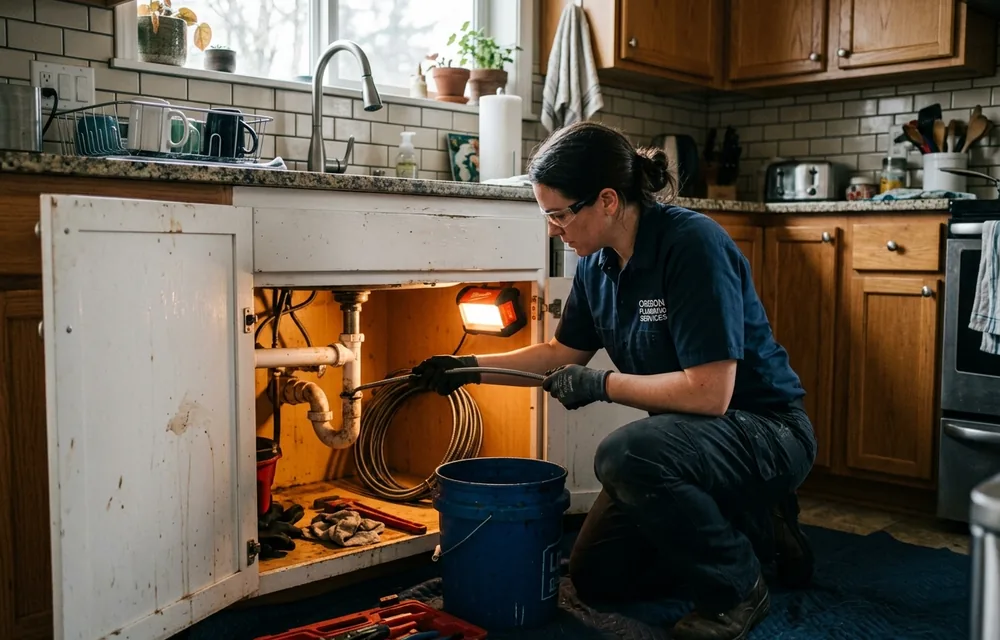
Match the drain cleaner to the clog
| The clog | Where it happens | What clears it best | Chemical cleaner? |
|---|---|---|---|
| Hair and soap | Bathroom sink, tub, shower | Pull the stopper, barbed drain strip, then a hand drain snake | Rarely needed; hair is mechanical |
| Grease and food | Kitchen sink | Plunger with the other basin sealed, then a drain snake through the trap | Not on a stopped line |
| Toilet | Toilet | Flange plunger, then a closet auger | No |
| Slow, not stopped | Any fixture | Mechanical first; a caustic or enzyme product is a reasonable second | Possibly, used as directed |
| Several drains at once | Whole house | A main-line cleaning, not a product | No |
| Tree roots | Main sewer line | Root cutting or hydro jetting | No |
The question "what is the best drain cleaner" has a different answer for each row, and the most common mistake is using the answer for the wrong one. A bottle that is fine on a slow bathroom sink is useless on a toilet and actively unhelpful on a kitchen line that has stopped completely.
Start by working out which clog you have. If one fixture is slow and everything else drains normally, it is a fixture clog within a few feet of that drain, and it is almost always something you can reach. If two or more fixtures are slow or gurgling, or water rises in the shower when you flush, the blockage is downstream in the main line, and no product you pour into one drain will reach it. Our guide to unclogging a drain yourself covers that test in more detail.
What is actually in a chemical drain cleaner
According to Poison Control, drain cleaners fall into three chemical families. Knowing which one is in your cupboard tells you what it can and cannot do.
Alkaline (caustic) cleaners contain sodium or potassium hydroxide, often called lye or caustic soda. They are the familiar gels and liquids sold in supermarkets. Caustics work by attacking fats and organic matter, which is why they can soften grease and soap scum. They do nothing useful to a solid obstruction, such as a toy, a wad of wipes or a root.
Acid cleaners contain sulfuric or hydrochloric acid. They are far more aggressive than caustics, they attack hair and organic material quickly, and they are the most dangerous of the three to handle.
Enzymatic cleaners contain bacteria and enzymes that digest organic buildup. They are the gentlest and the slowest of the three.
Poison Control also notes that some drain cleaners generate heat when their contents mix and go down the drain, which matters for the pipe, as the next section explains.
Poison Control's list of injuries is the reason to take all three seriously: swallowed, they cause severe chemical burns to the mouth, throat and stomach, and on skin they cause pain, irritation and burns. It advises goggles and rubber gloves whenever you use one, and pouring carefully and close to the drain to avoid splashing.
Where chemical drain cleaners go wrong
Chemical cleaners are sold for exactly the situation where they work worst: a drain that has stopped.
On a fully blocked line, the chemical never reaches the clog. It sits in the standing water above the obstruction, diluted and doing very little, while you wait. Then it is still there when you give up and plunge, or when somebody opens the line to clear it.
Heat is the pipe risk. Caustic cleaners generate heat as they work, and that heat, held against a pipe by standing water, can deform PVC and accelerate corrosion in old cast iron. Oregon has plenty of both: PVC in newer homes and ageing cast iron inside most homes built before the mid-1970s.
Plunging after a chemical is how people get burned. A plunger forces water, and whatever is dissolved in it, back up out of the drain. If you have poured a cleaner in and it has not worked, do not plunge and do not add a second product on top of the first.
Mixing products is dangerous. Different drain cleaners, and drain cleaner with other household chemicals, can react violently. Read the label, use one product, and never follow one with another.
Tell whoever clears it. If you have used a chemical cleaner and then call for help, say so, and say which one. The person opening that line is about to be splashed by it. It is a safety issue, not a judgement.
The drain cleaners that beat bottles
For most household clogs, the best drain cleaner is a tool, and the useful ones are cheap.
- Plunger. A cup plunger for sinks, tubs and showers; a flange plunger (the one with the extra rubber sleeve) for toilets. Seal the second opening, the overflow or the other basin, or the pressure escapes through it instead of moving the clog.
- Barbed plastic drain strip. A few dollars, and on a bathroom sink or tub it pulls out the hair mat that is causing most slow drains in a matter of seconds. It is the first thing to try on any bathroom drain.
- Hand drain snake (auger). A coiled steel cable you feed into the drain and crank. It reaches a clog past the trap that a strip cannot, and it breaks up grease plugs in kitchen branches. For toilets, a closet auger is the version with a guard that protects the porcelain.
- Wet/dry vacuum. Useful for pulling a clog back out of a drain rather than pushing it further in, particularly on a kitchen sink or a floor drain.
- Taking the trap off. The curved pipe under a sink unscrews by hand on most modern installations. With a bucket underneath, it is often the fastest way to see and remove exactly what is wrong.
The DIY clog guide walks through using each of these in the right order, and what to skip.
Enzyme cleaners: maintenance, not rescue
Enzyme and bacterial drain treatments are the one product category that makes sense to keep under the sink, as long as you use them for what they are.
They do not clear an existing clog. If the sink is backed up right now, an enzyme product will sit in the standing water just as a caustic would, only more slowly. What they can do is slow the build-up of grease and organic film in a line that has already been cleaned, used regularly according to the label.
They are at their best on kitchen lines, where grease is the long-term problem. The sensible sequence is to get the line properly cleaned once, then maintain it, and keep fats out of the drain in the first place. Our kitchen grease guide covers why grease accumulates and how to stop it.
Baking soda, vinegar and other home remedies
Baking soda and vinegar fizz impressively and are close to useless on a real blockage. Poison Control explains why: the reaction makes carbon dioxide, which escapes through the drain rather than building pressure, and the mixture is unlikely to be strong enough to melt away tough clogs of oil and grease.
Very hot water with dish soap is the one home remedy with a genuine use, on a kitchen sink with a soft grease plug. It softens and moves some grease. It will not move food solids, and it should never be used on a porcelain toilet or on older plastic pipe that could be damaged by boiling water.
Salt, bleach poured down to "disinfect" a clog, and coat-hanger wire all belong on the list of things that either do nothing or scratch, block or damage the fixture.
When no drain cleaner will help
Stop reaching for products and call when any of these is true:
- More than one fixture is affected. Gurgling toilets, a shower that fills when the washer drains, or water appearing in a floor drain all mean the blockage is in the main line. That needs a cable machine or hydro jetting at a cleanout. See drain cleaning.
- The same drain clogs again within months. A repeat clog in one line is a sign of something structural, such as roots, a sag or an offset joint, and clearing it again without looking is money spent twice. A sewer camera inspection shows the cause.
- You can smell sewage, or sewage is coming up anywhere in the house. Stop using water and treat it as urgent. See what to do in a sewer backup.
- You have already used a chemical and it did not work. Do not add more and do not plunge; the next step is mechanical, and whoever does it needs to know what is in the line.
Frequently asked questions
What is the best drain cleaner for hair?
A barbed plastic drain strip or a hand drain snake. Hair clogs are a mechanical tangle near the stopper, and pulling the mat out clears them in seconds. Caustic cleaners can soften the soap binding hair together, but they are slower, riskier and usually unnecessary when the clog is within reach.
What is the best drain cleaner for a kitchen sink?
A plunger with the other basin sealed, then a hand drain snake through the trap. Kitchen clogs are grease and food, and on a stopped sink a chemical cleaner only sits in the standing water. For a sink that is slow rather than stopped, very hot water with dish soap can move a soft grease plug.
Are chemical drain cleaners safe for pipes?
Used occasionally on a slow drain, as the label directs, they are a reasonable option. The problems come on fully blocked lines, where the chemical sits in standing water generating heat that can deform PVC and accelerate corrosion in old cast iron, and from mixing products or plunging afterwards.
Can I use drain cleaner in a toilet?
It is not the right tool. A toilet clog is usually a solid obstruction in the trapway that no chemical dissolves, and a bowl full of caustic water is dangerous if it splashes. Use a flange plunger first, then a closet auger, which is designed not to scratch the porcelain.
What should I do if I poured drain cleaner and the drain is still clogged?
Do not plunge and do not add a different product. Leave it, keep people and pets away from the fixture, and if you call someone, tell them exactly what you used. For any exposure to skin or eyes, or if someone swallows it, call Poison Control at 1-800-222-1222.
Services mentioned in this guide
Drain Cleaning
A single slow sink is a nuisance.
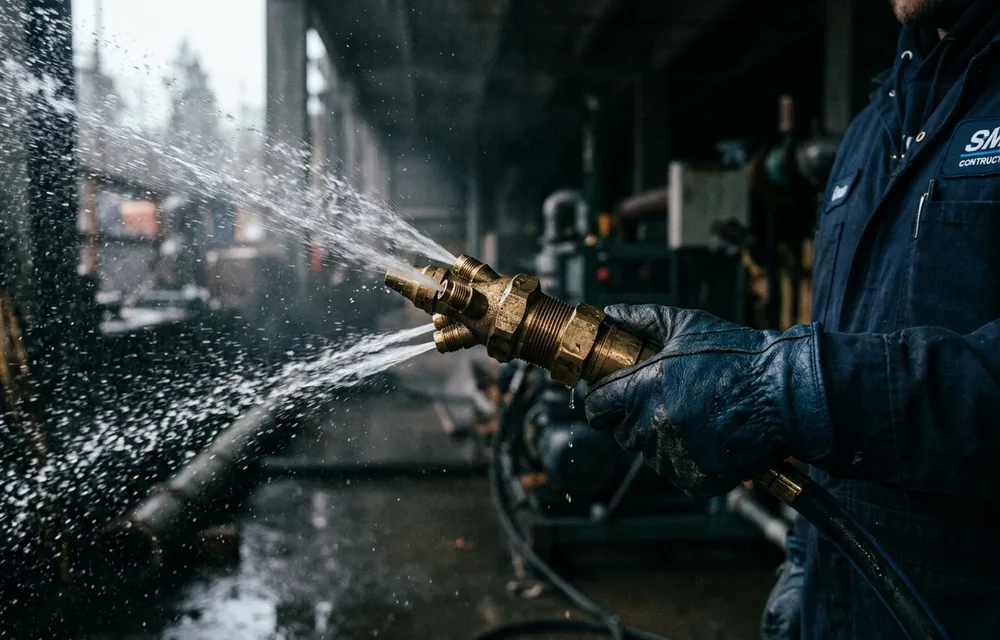
Hydro Jetting
A cable bores a hole through the clog.
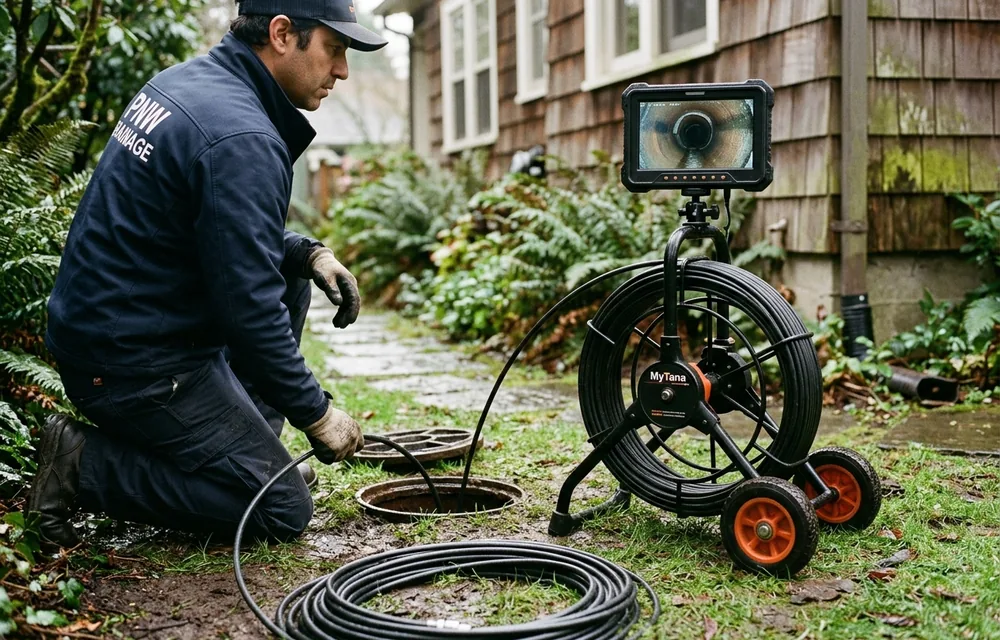
Sewer Scope & Camera Inspection
A sewer scope is the cheapest insurance in real estate and the only defensible basis for an excavation quote.
More guides
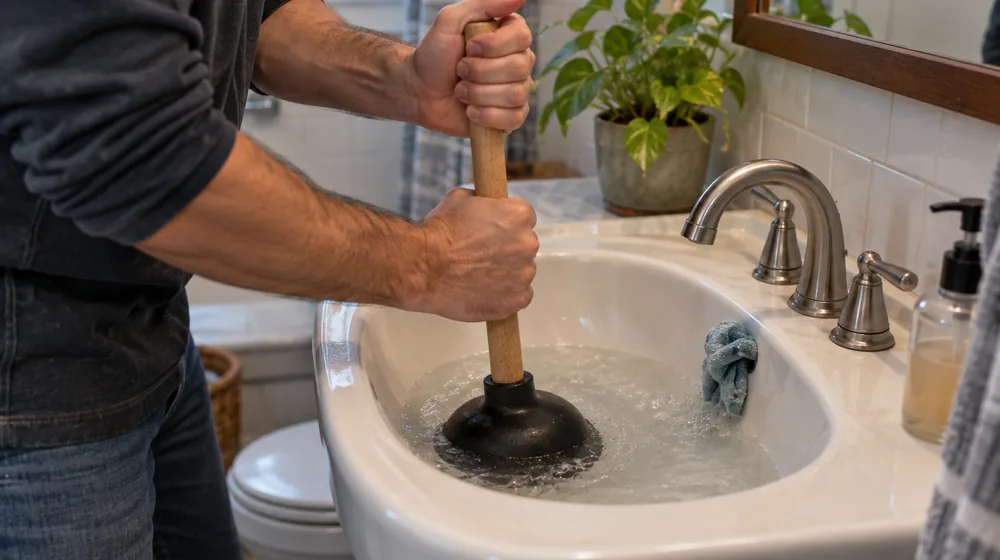
How to Unclog a Drain Yourself (and When to Stop)
Most single-fixture clogs are genuinely a DIY job. Here is what works, in the order a plumber would try it — and the p…
Sewer Backup: What to Do in the First Ten Minutes
A main line backup gets measurably worse with every gallon of water the household uses. What you do in the first ten m…

Winterize Oregon Plumbing: 2026–27 Winter Checklist
For winter 2026–27, NOAA forecasts a very strong El Niño, which usually tilts Oregon toward a warmer, drier winter, bu…